 Dra. Cléo Salustiano
In this article
SummaryStep by stepTechnical facts that help you talk to an implant dentistEast Zone and São Paulo: how to compare, and the office as one of the optionsFAQRead nextBest dental implant dentists in Mooca, East Zone and São Paulo: a guide to choosing

Quick summary of this article+
To choose an implant dentist in Mooca, the East Zone or São Paulo, weigh six criteria: registration and specialty with the CRO, CT scan and a full assessment, planning that starts from the prosthesis, clarity about who performs each stage, traceability of the implant and follow-up after the crown. Osseointegration takes a few months, and risks such as peri-implantitis are reduced with hygiene and check-ups. Dr. Cléo Salustiano's office (CRO-SP 170844) is one option in Mooca: Rua Hipódromo, 1141, every day 8 a.m. to 10 p.m., 5.0 rating on Google, working on planning, prosthetics and follow-up. This guide is not a ranking and gives no prices.
Short answer: to choose a dental implant dentist in Mooca, the East Zone or São Paulo, check six things: registration and specialty with the dental council (CRO), imaging such as CT scans, planning that starts from the prosthesis, clarity about who performs each stage, traceability of the implant and follow-up after the crown. Among the options in Mooca is Dr. Cléo Salustiano's office (CRO-SP 170844), at Rua Hipódromo, 1141, open every day from 8 a.m. to 10 p.m., including Sundays and holidays.
An implant is not a product purchase; it is a treatment with several stages spread over months that requires return visits. So the "best dentist" is, in practice, the professional with verifiable training and experience, transparent planning and availability for follow-up. This guide gathers the criteria, the technical facts that help you talk to a professional, and how to compare options in Mooca, the East Zone and the city of São Paulo in one place.
This guide is informational, follows Brazilian dental council (CFO/CRO) rules and is not a ranking: the order of the criteria does not indicate quality, and Dr. Cléo Salustiano's office (CRO-SP 170844) is mentioned only as one of the options, with verifiable data. There is no promise of results, and fees are only given in an individual quote after the assessment.
If your question is about a crown that came off or loosened, go straight to implant crown came off or loosened: what to do.
This article comes from Dr. Cléo Salustiano's dental office in Mooca, São Paulo (care in English, Portuguese and Spanish). See the dental implants page to learn how the treatment is done here and book your assessment.
Step by step
- Check registration and specialty with the council. Every dentist needs an active CRO registration. Implantology is a recognized specialty, but a professional may only present as a specialist if the title is registered with the council. Use the public lookup of CRO-SP and CFO. Dentists without a specialist title may perform implants within their competence; what they may not do is advertise a specialty that is not registered.
- Require imaging and a full assessment. Cone-beam CT shows the height, width and quality of the bone and the position of sinuses and nerves, and is the basis of planning. The assessment also covers gum health, bite, systemic conditions and medications.
- Ask whether planning starts from the prosthesis. The principle is to decide first where the crown should sit and then where the implant should be placed. This reasoning, called backward planning, supports esthetics, chewing and cleanability.
- Understand who performs each stage. Placement surgery, grafting (if needed), the temporary prosthesis and the final crown can be done by one professional or by a team. Ask who carries out each stage, who follows up afterward and what happens if complications arise.
- Ask for implant traceability. Patients have the right to know the brand, model, diameter and length of the implant and to receive that record in writing. This makes maintenance and replacement of components easier later, even at another office.
- Plan follow-up and what to do in an emergency. Implants require rigorous hygiene and periodic check-ups. Ask how often check-ups happen, how maintenance works and how to reach the office if the crown loosens or there is pain, including on weekends.
Technical facts that help you talk to an implant dentist
What the implant is. It is a titanium post placed in the bone to replace the root of a lost tooth. After placement, osseointegration takes place, a process in which bone bonds to the titanium surface. Integration usually takes a few months and varies with the area of the mouth, bone quality and protocol. Only then is the final crown made, unless the case allows immediate loading (see immediate-load implants).
When bone is insufficient. If height or width is lacking, a bone graft or sinus lift may be recommended before or together with placement, which adds stages and total time. The topic is covered in bone graft for dental implants. The assessment decides whether your case needs it.
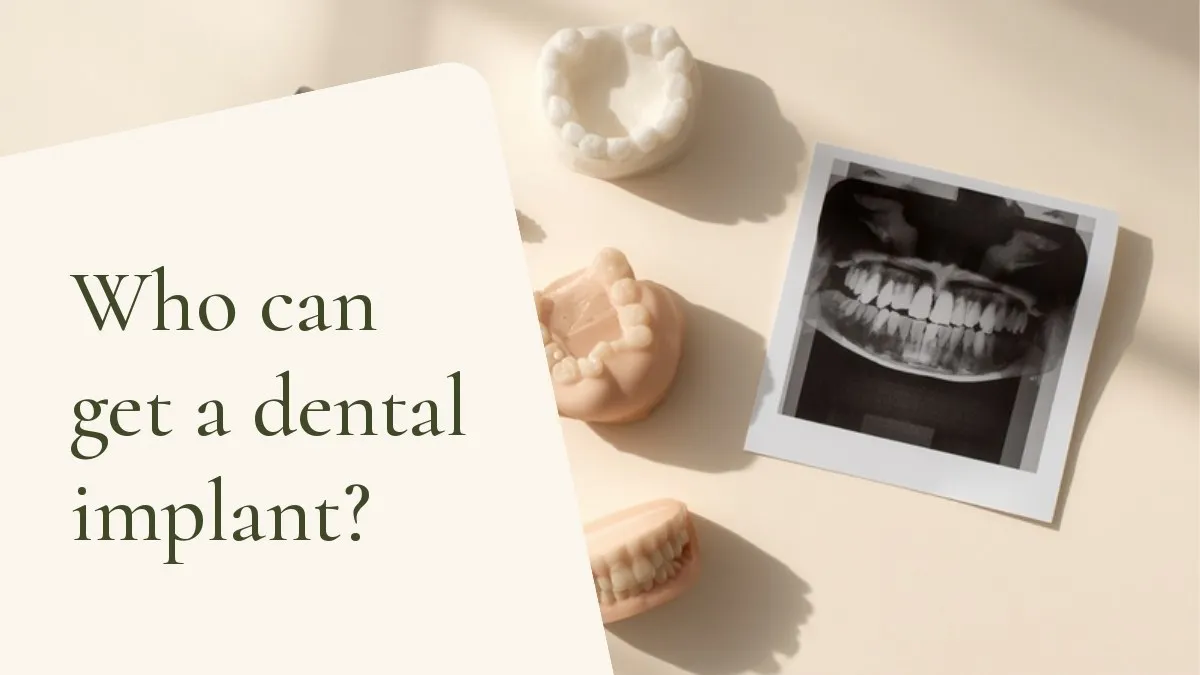
Who can have one. Age alone does not rule it out. General health, diabetes control, smoking, active periodontal disease and bone condition all weigh in. See who can get dental implants.
The visible part: the crown. A component and a crown, in porcelain or zirconia, screw-retained or cemented, sit on top of the implant. The choice affects esthetics, maintenance and how easily the piece can be removed if needed. Details are in screw-retained or cemented crown and implant crown.
Longevity and risks. Systematic reviews of the literature report survival rates above 90% at ten years in selected patients, but that is not a guarantee for an individual case. The main late complication is peri-implantitis, an inflammation of the tissues around the implant that can cause bone loss; review studies indicate it affects roughly one in five patients (Derks and Tomasi, 2015). Rigorous hygiene, smoking control and regular check-ups reduce the risk.
| Where you are | How to get to Rua Hipódromo, 1141 | Note |
|---|---|---|
| Mooca, Alto da Mooca and Brás | On foot, by bus or by subway to Bresser-Mooca (Line 3-Red) | About a 6-minute walk from the station; parking is available in the area |
| Belém, Tatuapé, Carrão, Penha and Vila Matilde | Line 3-Red to Bresser-Mooca, no transfer | Good for people who need evening or weekend hours |
| Anália Franco, Vila Prudente, Água Rasa and other East Zone neighborhoods | Bus, car or ride-hailing; or subway connecting to Line 3-Red | Check the route in a maps app before leaving |
| Other regions of the city of São Paulo | Line 3-Red (east–west) with connections to other lines | Worth it when the treatment needs few visits or when hours until 10 p.m. help |
East Zone and São Paulo: how to compare, and the office as one of the options
East Zone. For people who live or work in Tatuapé, Belém, Brás, Carrão, Penha or Vila Matilde, Subway Line 3-Red links those neighborhoods to Bresser-Mooca station without changing trains, and the office is about a 6-minute walk from it. See the route in dentist near Tatuapé, dentist near Bresser-Mooca station and dentist in the East Zone. When comparing East Zone professionals, distance matters less for planning visits and more for emergencies and frequent follow-ups, which is what should guide the choice.
The city of São Paulo. In searches for "best dentist in São Paulo", the first results tend to be directories and platform lists that mix professionals from across the city. For a short, reliable list, combine three verifiable sources: the public registry lookup at the dental council (CRO-SP) to confirm registration and registered specialties, the public Google reviews (volume, dates and content of the accounts) and the professional's own website. Subway Line 3-Red crosses the city from east to west and connects to other lines, which makes it easier to reach Mooca from other regions for treatments that need few visits.
One option in Mooca: Dr. Cléo Salustiano's office. Address: Rua Hipódromo, 1141, Mooca, São Paulo (postal code 03164-140). Hours: every day from 8 a.m. to 10 p.m., including Sundays and holidays, by appointment. Access: about a 6-minute walk from the Bresser-Mooca subway station (Line 3-Red). Private care, in Portuguese, English and Spanish. Reviews: 5.0 rating on Google with more than 150 public reviews (numbers change; check the Google profile and patient reviews).
How the office works with implants. Dr. Cléo is a dentist (CRO-SP 170844), with a dental degree from UNICID and a postgraduate course in Prosthodontics and Restorative Dentistry at São Leopoldo Mandic, and does not present herself as an implantologist. The office's focus in implants is planning, implant-supported prosthetics and follow-up. If any stage is carried out by another professional, you are told transparently before treatment starts. More details on the page about dental implants in Mooca.
Warning signs when choosing. Be wary of anyone who promises results without an exam, skips the CT scan, does not tell you the implant brand, does not explain risks or alternatives (such as removable or fixed prosthesis), or uses price as the only argument. Ads from professionals with no registered title who call themselves specialists are also a reason for caution. At any office, fees are only set after the exam; see what influences the investment in how much a dental implant costs, an article that gives no prices.
How do I choose the best dental implant dentist?
+
Check registration and specialty with the CRO, ask for a CT scan and full assessment, confirm that planning starts from the prosthesis, understand who performs each stage and ask for the implant brand in writing. Also compare public reviews and availability for follow-up.
Do I need an implantologist, or can a general dentist do it?
+
Implantology is a recognized specialty, and a professional may only present as a specialist if the title is registered with the council. Dentists without the title may perform procedures within their competence, but complex cases may be referred to a specialist.
Is a CT scan required for an implant?
+
In clinical practice it is the reference exam for planning most implants, because it shows bone volume and quality. The professional decides which exams your case needs.
How long does a dental implant take?
+
It varies with the bone, the area of the mouth and the protocol. Osseointegration usually takes a few months, and cases with grafting take longer. In selected situations immediate loading is possible, but that is only decided at the assessment.
Does an implant hurt?
+
Placement is done under local anesthesia. Afterward there may be discomfort and swelling for a few days, usually managed with the professional's instructions. Experiences vary from person to person.
How much does a dental implant cost?
+
The fee depends on the number of implants, the type of prosthesis, the need for grafting and exams, and is only given after the assessment. This guide gives no prices. See the factors in how much a dental implant costs.
What if the implant crown comes off on a weekend?
+
Keep the piece, do not glue it at home and avoid chewing on that side. Contact the office that made the prosthesis. Dr. Cléo's office is open every day from 8 a.m. to 10 p.m., by appointment, and assesses crowns made by other professionals.
How long does a dental implant last?
+
It depends on hygiene, check-ups, control of factors such as smoking and gum health. Literature reviews show high survival rates at ten years in selected patients, but that is not an individual guarantee.
Where can I get a dental implant in São Paulo's East Zone?
+
There are professionals and clinics in several East Zone neighborhoods. Compare professional registration, experience with the procedure, public reviews and follow-up after treatment. Dr. Cléo Salustiano's office is in Mooca, in the East Zone, about a 6-minute walk from the Bresser-Mooca subway station.
Is there a dentist for dental implants open on Sundays or in the evening?
+
Dr. Cléo Salustiano's office is open every day from 8 a.m. to 10 p.m., including Sundays and holidays, by appointment through WhatsApp (11) 97409-7834. Other offices may keep different hours, so confirm before you go.
Does the office accept dental insurance, and is care available in other languages?
+
Care is private, with no insurance or dental plans. Appointments can be held in Portuguese, English or Spanish.