 Dra. Cléo Salustiano
In this article
SummaryWhat types of dental veneers are there?What are the pros and cons of dental veneers?FAQRead nextDental Veneers: What They Are, Types, Pros and Cons

Quick summary of this article+
A dental veneer is a thin layer of composite resin or porcelain bonded to the front of a tooth to change its color, shape, size or apparent alignment. Direct composite veneers are made in the mouth with little or no reduction and can be repaired, but they stain and need polishing. Porcelain veneers are made in a lab and keep their color better, but involve more steps and usually need a new piece if they break. A dental contact lens is a thinner veneer. Veneers do not replace braces for very crooked teeth and require healthy teeth and gums. The indication depends on an in-person assessment. In Mooca, Dr. Cléo Salustiano (CRO-SP 170844) sees patients every day, from 8 a.m. to 10 p.m.
A dental veneer is a thin layer of material, usually composite resin or porcelain (ceramic), bonded to the front surface of a tooth to change its color, shape, size or apparent alignment. It does not replace the tooth: it adheres to the enamel and covers only the visible part. It is one of the most requested cosmetic dentistry treatments because, when properly indicated, it addresses several smile concerns at once.
There are two main types: the direct veneer, made from composite right in the mouth, layer by layer, and the indirect veneer, made in a lab (usually porcelain) and then bonded. So-called dental contact lenses are thinner veneers, usually porcelain, although the term is also used for thin composite veneers. The choice depends on the tooth, the bite, habits and what the person expects from the result.
Dr. Cléo Salustiano (CRO-SP 170844), a dentist in Mooca focused on cosmetic dentistry and composite veneers, explains how each type works, who veneers usually suit, and the pros and cons worth knowing before deciding.
This article comes from Dr. Cléo Salustiano's dental office in Mooca, São Paulo (care in English, Portuguese and Spanish). See the composite veneers page to learn how the treatment is done here and book your assessment.
Topic overview: our guide to composite veneers covers who they suit, the step-by-step process, lifespan, aftercare and composite vs porcelain.
What types of dental veneers are there?
Dental veneers are grouped by material and by how they are made: direct composite veneers, indirect porcelain (ceramic) veneers and, in some cases, indirect composite veneers made in a lab. Within these groups are the so-called dental contact lenses, thinner versions with little or no tooth reduction.
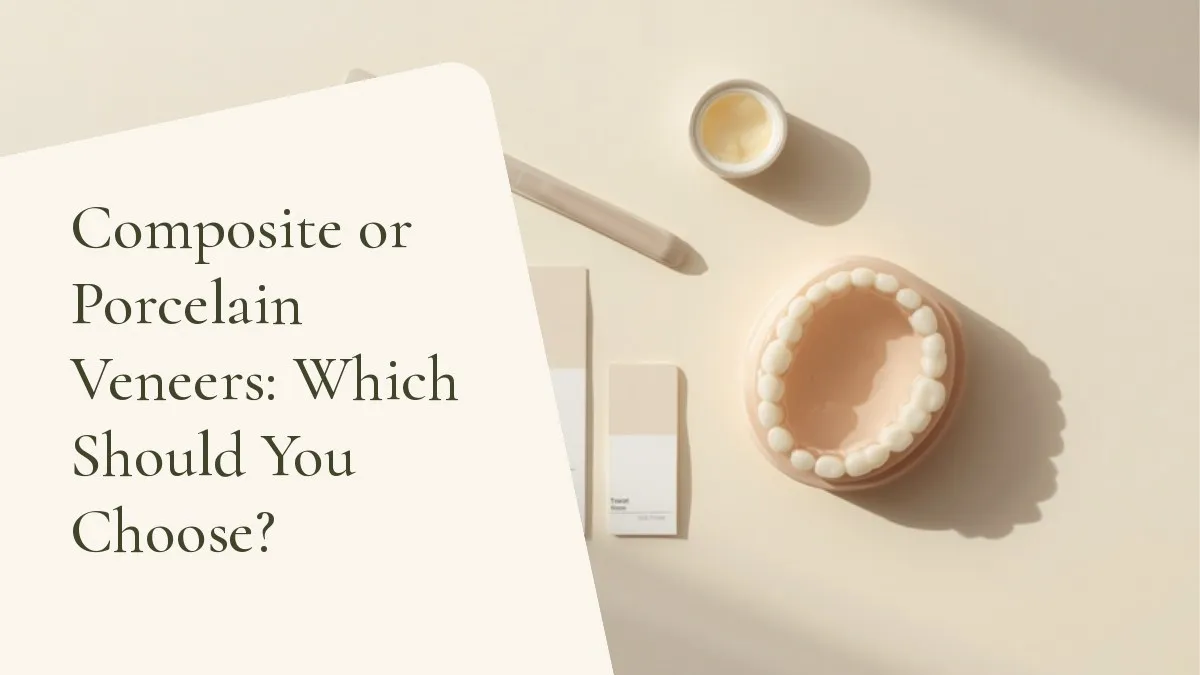
Direct composite veneer: composite resin, the same tooth-colored material used in fillings, is applied in layers and hardened with a curing light (hence the technical term "light-cured"). The dentist then shapes and polishes it. It usually requires little or no tooth reduction, can be done in fewer visits and can be repaired chairside. In exchange, it tends to pick up stains and lose shine over time and needs periodic polishing.
Porcelain veneer: made in a lab from an impression or digital scan and bonded to the tooth. Porcelain keeps its color and shine longer and resists staining better. On the other hand, it involves more steps, almost always some enamel preparation and, if it breaks, usually needs a new piece.
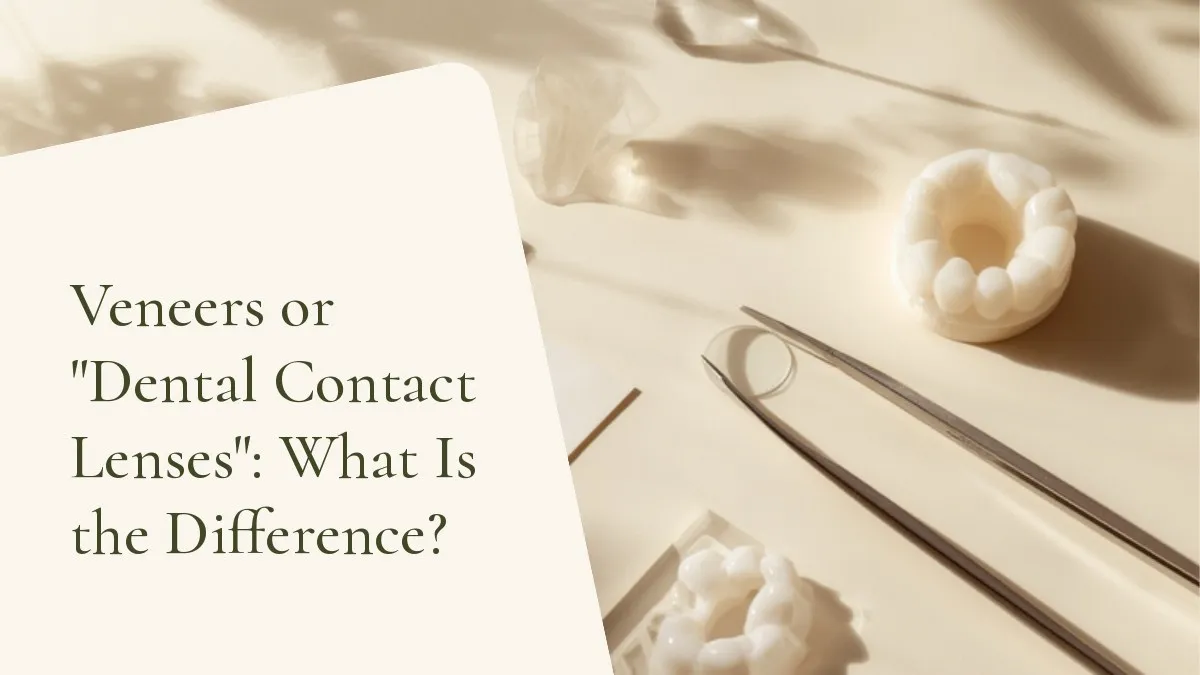
Dental contact lens: the popular name for very thin veneers. In porcelain, they can be made with no or minimal reduction in selected cases, such as small teeth or teeth with gaps. In composite, the lens is usually made directly in the mouth. The name does not change the principle: it is a veneer, with the same indications and limits.
All types require healthy teeth and gums first. Cavities, inflamed gums or uncontrolled grinding do not rule veneers out forever, but they need to be treated or controlled before starting.
| Point | Direct composite veneer | Porcelain veneer |
|---|---|---|
| How it is made | In the mouth, in layers, light-cured | In a lab, then bonded |
| Tooth reduction | Little or none in most cases | Minimal to moderate; sometimes none |
| Color over time | Can stain; needs polishing | More stable |
| If it chips | Usually repaired chairside | Usually needs a new piece |
| Steps | Fewer visits | More steps (impression, try-in, bonding) |
What are the pros and cons of dental veneers?
The main advantage of veneers is correcting color, shape, size and small misalignments or gaps in a single treatment, with a visible result at the end. The main drawback is that veneers need maintenance and have a lifespan: they are not a "forever" treatment and, depending on the case, involve some enamel reduction that does not grow back.
Commonly cited advantages: color change that whitening cannot reach, such as internal stains; correction of small, worn or irregular teeth; closing small gaps; a uniform-looking smile. Composite adds quick chairside repair; porcelain adds color stability.
Drawbacks and limits: composite can stain, chip and lose shine, and needs polishing and check-ups; porcelain has more steps, and breaks usually require a new piece; any veneer can debond; enamel preparation, when needed, is irreversible. Veneers also do not replace orthodontics for very crooked teeth and do not treat gum or bite problems.
Who usually benefits: adults with healthy teeth who want to change color or shape, close small gaps or restore worn teeth. Who needs extra care: people who grind their teeth, have inflamed gums or active cavities, or expect a very artificial white. That is why you should consult a dentist before deciding: an in-person assessment defines the type and number of teeth.
In Mooca, Dr. Cléo Salustiano sees patients every day, from 8 a.m. to 10 p.m., including Sundays and holidays. To compare materials, see composite vs porcelain veneers, the pages on thin composite veneers in Mooca and porcelain veneers, and cosmetic dentistry in Mooca.
What is a dental veneer?
+
It is a thin layer of composite resin or porcelain bonded to the front of a tooth to change its color, shape, size or apparent alignment. It covers only the visible part and adheres to the enamel. It does not replace the tooth or treat cavities or gum disease, which must be healthy beforehand.
What is the difference between a veneer and a dental contact lens?
+
A dental contact lens is a thinner veneer. In porcelain, it can be made with minimal or no reduction in selected cases. The principle is the same: a layer bonded to the front of the tooth. What changes is the thickness and, therefore, which cases it suits.
What does a direct light-cured composite veneer mean?
+
It means the veneer is made directly in the mouth, with composite resin applied in layers and hardened with a special light. The dentist then adjusts the shape and polishes it. It usually involves little or no reduction and can be repaired chairside.
What are the disadvantages of dental veneers?
+
They need maintenance, have a lifespan, can chip or debond, and composite can stain over time. When enamel is prepared, that is irreversible. Veneers also do not fix very crooked teeth or bite problems. That is why the indication should come from an in-person assessment.
Do veneers ruin your teeth?
+
When properly indicated and placed on healthy teeth, veneers do not ruin them. The point of attention is enamel reduction, which is not always needed and, when done, does not grow back. Poor hygiene, unprotected grinding and poorly fitted edges increase the risk of problems.
Who can get dental veneers?
+
Generally, adults with healthy teeth and gums who want to change color or shape, close small gaps or restore worn teeth. Active cavities, inflamed gums and uncontrolled grinding must be treated first. Consult a dentist to find out whether your case is a good fit.
Where can I have veneers assessed in Mooca?
+
In Mooca, Dr. Cléo Salustiano (CRO-SP 170844) assesses composite and porcelain veneer cases at Rua Hipódromo, 1141, near Bresser-Mooca station. The office is open Monday to Sunday, from 8 a.m. to 10 p.m., including holidays, via WhatsApp (11) 97409-7834. She sees patients in Portuguese, English and Spanish.