 Dra. Cléo Salustiano
 In this article
SummaryHow long does implant treatment take?What affects (and what can extend) the timeline?FAQRead nextHow long does a dental implant take?
Book your dental implants assessment on WhatsAppPrefer not to wait for a reply? Book online now, no phone call needed: see the open times and pick yours, any time (booking page in Portuguese).
Quick summary of this article+
Implant treatment usually takes anywhere from a few months to longer, with most of that time spent on osseointegration (the implant bonding with the bone), which takes months and can't be rushed. The steps include assessment, any graft needed, surgery, healing and the prosthesis. Lack of bone, gum disease, diabetes and smoking can extend the timeline. A temporary is often used during the waiting period. In Mooca, Dr. Cléo Salustiano (CRO-SP 170844) sees patients every day, 8 a.m. to 10 p.m.
How long does a dental implant take? Complete treatment usually takes anywhere from a few months to longer, because it involves several steps and a healing phase (osseointegration) that can't be rushed. There's no single timeline: it depends on your case, whether preparation is needed and how your body responds. Understanding the steps helps you keep realistic expectations.
In clinical practice, patients often imagine that an implant is 'done in a day.' In some cases there are quick temporary solutions, but the final result follows a biological timeline. Knowing this avoids anxiety and frustration during treatment.
In this article, Dr. Cléo Salustiano (CRO-SP 170844) explains the steps of implant treatment, how long each usually takes and what can extend it. Since every case is unique, the actual timeline can only be estimated after an assessment with imaging.
This article comes from Dr. Cléo Salustiano's dental office in Mooca, São Paulo (care in English, Portuguese and Spanish). See the dental implants page to learn how the treatment is done here and book your assessment.
How long does implant treatment take?
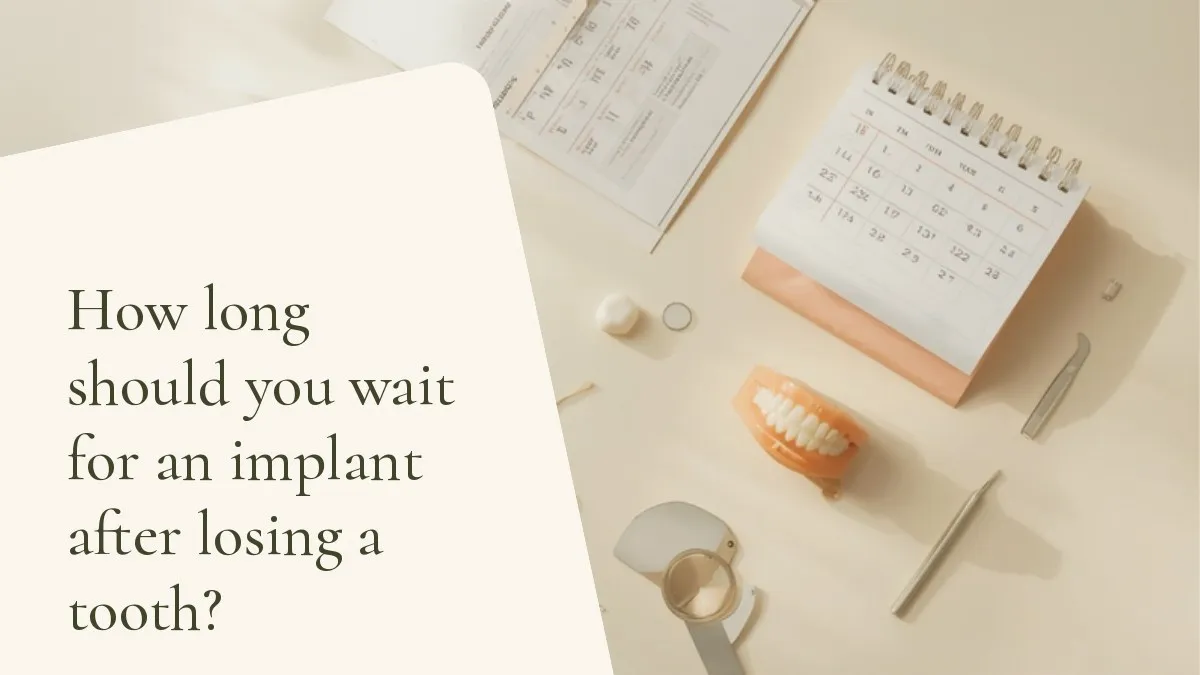
Implant treatment usually takes anywhere from a few months to longer, from the start (assessment) to the final prosthesis. Most of that time is osseointegration, the phase when the implant bonds with the bone, which generally takes a few months and can't be rushed.
Placing the implant itself is usually relatively quick. What extends treatment is the set of steps: assessment and planning with imaging, any preparation needed (such as a bone graft), the placement surgery, healing and, finally, placing the prosthesis.
Osseointegration is the heart of the treatment: it's when the bone 'hugs' the implant, giving it the firmness it needs to receive the prosthesis and work like a root. Respecting this time is what supports a solid, long-lasting implant; skipping this phase compromises everything.
When bone is lacking, a bone graft may be needed before the implant, which adds time (the area needs to heal first). That's why cases that need preparation usually take longer. This is assessed in the initial imaging.
In many cases, a temporary solution can be used during the waiting period so you're not left without a tooth, especially in the front of the mouth. The temporary doesn't shorten osseointegration, but it takes care of appearance and function while the implant integrates.
In short, implant time is largely biological healing time, and that's a good thing: it's what makes the result firm and long-lasting. The timeline for your case is estimated during planning, with no exact guarantee, since every body responds differently.
| Step or factor | Effect on time |
|---|---|
| Assessment and planning with imaging | First step, before any surgery |
| Preparation when bone is lacking (graft) | Adds time, because it comes before the implant |
| Treating gum disease | Also comes first and extends the timeline |
| Implant placement surgery | The placement itself is usually relatively quick |
| Osseointegration | Most of the time: a few months, and it can't be rushed |
| Placing the prosthesis | Final step, after integration |
| Uncontrolled diabetes and smoking | Can delay osseointegration and increase the risk of complications |
| Area of the mouth | Different bone densities affect integration time |
| Post-surgery care | Hygiene, diet, rest and follow-up visits support healing |
What affects (and what can extend) the timeline?
The main factor is whether preparation is needed. If there's enough bone and your mouth is healthy, treatment tends to be more straightforward. If bone is lacking (requiring a graft) or there's gum disease to treat, it takes longer, because those steps come first.
Overall health affects healing. Conditions like uncontrolled diabetes and habits like smoking can delay osseointegration and increase the risk of complications. Managing these factors supports more predictable treatment.
The area of the mouth matters too. Different areas have different bone density, which can affect integration time. Your dentist takes this into account during planning, defining the strategy for your specific case.
Your cooperation after surgery matters: following instructions on hygiene, diet and rest, and attending follow-up visits, helps healing go well. Complications from lack of care can extend treatment.
The prosthesis phase has its own timeline: after osseointegration, the final prosthesis is planned, the impressions are taken and it's placed, which involves a few appointments. This final step is what restores full appearance and function.
Finally, remember that rushing isn't your friend here. Respecting healing time is what supports a firm, long-lasting implant. Brazilian dental council rules (CFO/CRO) don't allow promises about timelines; what exists is an honest estimate, made during the assessment.
How long does a dental implant take?
+
Complete treatment usually takes anywhere from a few months to longer, from start to final prosthesis. Most of that time is osseointegration (bonding with the bone), which takes months and can't be rushed. There's no fixed timeline; it depends on the case and is estimated during the assessment.
Why does an implant take months?
+
Because of osseointegration: the bone needs to 'hug' the implant to give it the firmness it needs before receiving the prosthesis. This biological time can't be rushed, and it's precisely what supports a solid, long-lasting implant.
Does placing the implant take long?
+
The placement surgery itself is usually relatively quick. What extends treatment are the steps around it: planning, any preparation (graft), healing (osseointegration) and the final prosthesis phase.
What is osseointegration?
+
It's the phase when the bone bonds with the implant, giving it the firmness to work like a root and receive the prosthesis. It generally takes a few months, varying with the case and the person. Respecting this time is essential for success.
Will I be without a tooth during treatment?
+
Not necessarily. In many cases, a temporary solution can be used while the implant integrates, especially in the front of the mouth. The temporary doesn't shorten healing, but it takes care of appearance and function during the wait.
Does a bone graft add time?
+
Yes. When bone is lacking, the graft is done before the implant and the area needs to heal, which adds time to treatment. That's why cases needing preparation usually take longer. The need is assessed in the initial imaging.
Is there such a thing as an implant 'in a day'?
+
In some cases, the implant and a temporary can be placed in the same step (immediate loading), but that depends on specific conditions assessed individually. Even so, osseointegration and the final prosthesis still follow their own timeline.
Does smoking delay an implant?
+
Yes. Smoking impairs healing and increases the risk of complications with implant integration. Cutting back or quitting, especially during treatment, supports a more predictable and safer result.
Does diabetes affect the timeline?
+
It can affect healing. With diabetes under control and proper follow-up, an implant is often feasible; the main concern is osseointegration. Your dentist can coordinate treatment with your physician to ensure safety.
How long does the prosthesis phase take?
+
After osseointegration, the final prosthesis is planned, the impressions are taken and it's placed, which involves a few appointments over a few weeks. It's the final step, restoring full appearance and function to the tooth.
Can I speed up treatment?
+
Osseointegration can't be safely rushed; it's biological time. Forcing steps increases the risk of failure. What helps avoid delays is taking good care after surgery, managing factors like smoking and attending follow-up visits.
Does every implant take the same time?
+
Not necessarily. The area of the mouth, bone density, the need for a graft and your health all play a role. That's why two implants can take different amounts of time. Planning estimates the timeline for your specific case.
Is the time worth it?
+
For many patients, yes: an implant is a fixed, long-lasting solution that restores function and appearance and preserves the neighboring teeth. Healing time is what makes the result firm. The assessment helps you make an informed decision.
Is the timeline guaranteed?
+
No. Brazilian dental council rules (CFO/CRO) don't allow timelines to be guaranteed, and every body responds differently. Your dentist gives an honest estimate during planning, which may be adjusted during treatment depending on how you heal.
How long until I can chew normally?
+
Once the final prosthesis is in place and integration is complete, the implant works like a natural tooth for chewing. During healing, follow your dentist's dietary guidance. A full return to normal chewing happens at the end of treatment, with the implant firmly in place.
Where can I find out how long my implant will take in Mooca?
+
Dr. Cléo Salustiano (CRO-SP 170844) sees patients at Rua Hipódromo, 1141, in Mooca, São Paulo, Monday to Sunday, 8 a.m. to 10 p.m., in Portuguese, English and Spanish. An assessment with imaging estimates the timeline for your case and defines the implant plan.