 Dra. Cléo Salustiano
 In this article
SummaryWhat care do composite veneers need?How to keep your veneers looking good for longerFAQRead nextEveryday care for composite veneers
Book your composite veneers assessment on WhatsAppPrefer not to wait for a reply? Book online now, no phone call needed: see the open times and pick yours, any time (booking page in Portuguese).
Quick summary of this article+
Everyday care for composite veneers is mostly the care a healthy smile needs, with extra attention: thorough hygiene (soft brush, non-abrasive toothpaste, floss), not biting hard objects or using your teeth as tools, managing bruxism (a night guard when recommended) and going easy on staining foods and drinks (coffee, wine, cigarettes). Keep up check-ups, with polishing and repairs. Good care is what makes them last. In Mooca, São Paulo, Dr. Cléo Salustiano (CRO-SP 170844) sees patients every day, 8 a.m. to 10 p.m.
What everyday care do composite veneers need? The good news is that it's mostly the same care a healthy smile needs — thorough hygiene, sensible eating and regular check-ups — plus a bit more attention to risky habits. These simple steps are what help your results stay looking good for much longer.
In clinical practice, the difference between veneers that stay looking great for years and those that need early repairs often comes down to daily life: how the person brushes, what they eat and whether they grind their teeth. Small habits add up to a big difference.
In this article, Dr. Cléo Salustiano (CRO-SP 170844) explains how to care for composite veneers — hygiene, food, habits and maintenance. Since every case is unique, your own dentist's guidance should always come first for your smile.
This article comes from Dr. Cléo Salustiano's dental office in Mooca, São Paulo (care in English, Portuguese and Spanish). See the composite veneers page to learn how the treatment is done here and book your assessment.
What care do composite veneers need?
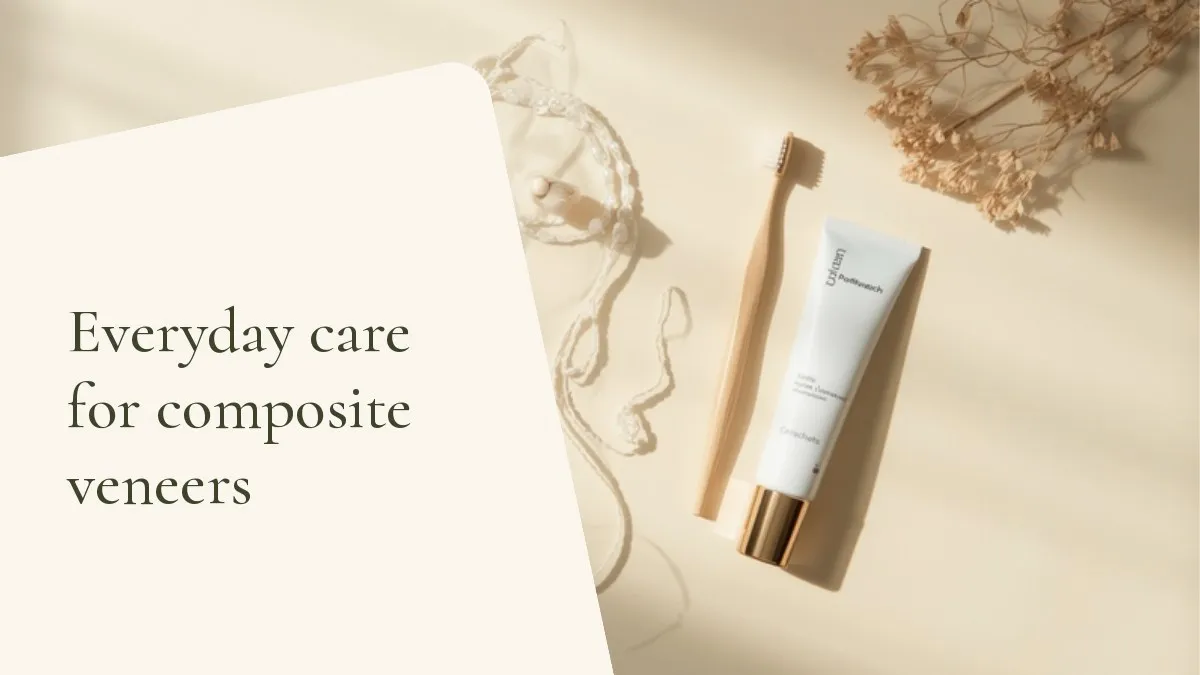
The most important step is thorough hygiene: a soft-bristled toothbrush, gentle strokes and a non-abrasive toothpaste, plus daily flossing. This protects the veneers as well as your gums and natural teeth, keeping the foundation healthy.
Avoid very abrasive or "whitening" toothpastes, which can wear down the composite's polish over time, making it more porous and prone to staining. Brushing hard also causes wear — a gentle touch cleans well and preserves the shine.
Watch out for risky habits: don't use your teeth as tools (opening packages, cutting thread), don't bite your nails, and avoid biting hard objects like ice, pens and caps. These habits are among the main causes of chipped or fractured veneers.
Take care of bruxism. If you grind or clench your teeth, especially at night, a night guard is usually recommended. Bruxism is one of the biggest threats to how long veneers last, and protecting your work while you sleep makes a big difference.
Go easy on staining foods and drinks. Composite can absorb pigments from coffee, wine, tea and cigarettes over time. Cutting back, drinking water after dark drinks and keeping up your hygiene help preserve the color. Quitting smoking does the most to protect the shine.
Finally, keep your regular check-ups. At these visits, your dentist polishes the veneers to restore their shine, removes surface stains, checks your gums and makes small repairs. Maintenance is part of the treatment — it's not a sign that something went wrong.
| Area | What helps | What harms |
|---|---|---|
| Brushing | Soft bristles, gentle strokes and non-abrasive toothpaste | Whitening or abrasive toothpaste and brushing hard, which wear down the polish |
| Cleaning between teeth | Daily flossing, which protects the veneer edges and gums | Skipping floss and letting plaque build up at the edges |
| Habits | Cutting hard foods and chewing with your back teeth | Using teeth as tools, nail biting and biting ice, pens and caps |
| Bruxism | A night guard when recommended | Grinding or clenching without protection |
| Color | Going easy on coffee, wine, tea and dark sodas and being thorough with hygiene afterward | Smoking, which does the most harm to color |
| Maintenance | Regular check-ups, with polishing that restores the original look | Trying to whiten or restore veneers with homemade products and abrasive pastes |
How to keep your veneers looking good for longer
The foundation for longevity is routine: daily hygiene, sensible eating and up-to-date check-ups. It's not a complicated routine, but it is a consistent one. Together, these three pillars do the most to extend the life of composite veneers.
When eating, avoid using your front teeth to bite into very hard foods (whole raw apples and carrots, bones, hard nougat). Cutting food into pieces and chewing with your back teeth reduces the force on the veneers and helps prevent fractures.
To preserve the color, cut back on or moderate coffee, wine, tea and dark sodas, and be thorough with hygiene afterward. When the composite loses some shine or picks up surface stains, polishing at check-ups usually restores its original look.
Don't try to whiten or "restore" your veneers with homemade products or abrasive pastes — this can wear them down and make things worse. Veneers don't whiten with bleaching gel; stains and loss of shine are fixed with professional polishing or repair.
Watch for signs: if you notice a veneer that's chipped, loose, has a stain that won't come off or a rough edge, see your dentist. The sooner it's repaired, the simpler the repair usually is. One of the advantages of composite is precisely how easy it is to repair at the dental office.
Finally, keep up follow-up visits at the recommended frequency. Regular check-ups make it possible to act early, with simple procedures, rather than having to redo everything later. Good care is what helps composite veneers keep looking good for many years.
What care do composite veneers need?
+
Thorough hygiene (soft brush, non-abrasive toothpaste, floss), not biting hard objects or using your teeth as tools, managing bruxism and going easy on staining foods and drinks (coffee, wine, cigarettes). Plus regular check-ups with polishing. The care is simple, but it needs to be consistent.
How should I brush with veneers?
+
With a soft-bristled brush, gentle strokes and a non-abrasive toothpaste, plus flossing. Brushing hard or using abrasive products can wear down the composite's polish. A gentle touch cleans well and preserves the veneers' shine.
Can I use whitening toothpaste?
+
It's not recommended. Many "whitening" toothpastes are abrasive and can wear down the composite's polish, making it more porous and prone to stains. They also don't whiten the veneer. Choose non-abrasive toothpastes and ask your dentist what suits you.
What can chip or break a veneer?
+
Biting hard objects (ice, pens, caps), using your teeth as tools, nail biting and bruxism. These habits put stress on veneers and are among the main causes of fractures. Common sense day to day and a night guard (for bruxism) help prevent them.
Do composite veneers stain?
+
They can absorb pigments from coffee, wine, tea and cigarettes over time. Stains are usually superficial and come off with polishing at check-ups. Cutting back, drinking water after dark drinks and keeping up your hygiene help preserve the color.
Do I need a night guard?
+
If you grind or clench your teeth, probably yes. A night guard protects veneers from wear and fractures while you sleep. The recommendation is individual, made by your dentist after checking for signs of bruxism. It's a step that greatly extends your results.
How often should my veneers be checked?
+
Generally every six months, or as your dentist recommends. Check-ups include polishing, small repairs and a gum assessment. This follow-up is what keeps veneers looking good and prevents bigger problems.
Can I eat anything with veneers?
+
Almost anything, with common sense. Avoid using your front teeth to bite very hard foods (whole raw apples and carrots, bones). Cutting food into pieces and chewing with your back teeth lowers the risk of chipping. It's not about living in fear — it's about being careful.
Can a chipped veneer be repaired?
+
In most cases, yes. One advantage of composite is that it can be repaired directly at the dental office, often without redoing the whole veneer. The sooner it's repaired, the simpler it usually is — which is why check-ups matter.
Can I whiten my veneers?
+
No. Veneers don't whiten with bleaching gel — it only works on natural teeth. If a veneer is stained or has lost its shine, the fix is professional polishing or repair, not whitening. Abrasive homemade products can make things worse and should be avoided.
Do veneers need much more care than natural teeth?
+
Not much more: it's the care of a healthy smile, with extra attention to risky habits and maintenance. The routine is similar to that of someone who takes good care of their natural teeth. The difference is consistency and check-ups with polishing.
What should I do if a veneer comes off?
+
See your dentist. A veneer coming off is usually linked to trauma, unprotected bruxism or risky habits. Rebonding or repair is often simple. Keep the piece if you can, and avoid chewing on that side until you're seen.
Can poor hygiene damage veneers?
+
It can do a lot of harm. Poor hygiene encourages stains, gum problems and cavities around the veneers, affecting both the result and your health. That's why gentle brushing, flossing and check-ups matter so much for longevity.
Can I use mouthwash with veneers?
+
Generally yes, as a complement to hygiene. Choose products your dentist recommends and avoid very abrasive or "whitening" ones. Mouthwash doesn't replace gentle brushing and flossing, which are the foundation of veneer care.
Can flossing loosen a veneer?
+
No, when done with the correct technique. Flossing is essential for the health of the gums and teeth around the veneers. If you feel the floss catching on an edge, mention it at your check-up — it may just need a small finishing adjustment.
Where can I get composite veneer care in Mooca?
+
Dr. Cléo Salustiano (CRO-SP 170844) sees patients at Rua Hipódromo, 1141, in Mooca, São Paulo, Monday to Sunday, 8 a.m. to 10 p.m., in Portuguese, English and Spanish. The assessment sets a maintenance plan to help keep your veneers looking good and healthy.