 Dra. Cléo Salustiano
In this article
SummaryWhen an extraction is indicated and how it is doneAftercare: food, hygiene, kissing and healingFAQRead nextTooth Extraction: How It Is Done, Aftercare and What to Eat

Quick summary of this article+
A tooth extraction is done under local anesthesia, either as a simple or a surgical procedure, after a clinical exam and, when needed, imaging. The most important aftercare is protecting the clot: in the first 24 hours, bite on the gauze, do not rinse hard, spit, use a straw or smoke. Cold or lukewarm soft foods, chewed on the other side, are recommended in the first days. Kissing with suction should wait a few days. The gum usually closes in one to two weeks. Pain that gets worse again after two to four days may be dry socket; fever or spreading swelling needs urgent care. In Mooca, Dr. Cléo Salustiano (CRO-SP 170844) sees patients every day, from 8 a.m. to 10 p.m.
A tooth extraction is done under local anesthesia: the dentist loosens the tooth from the tissues holding it to the bone and removes it with dedicated instruments, sometimes placing stitches in the gum. Afterwards, the key is to protect the blood clot that forms in the socket. In the first 24 hours, that means biting on the gauze, not rinsing hard, not spitting, not using a straw, not smoking and eating cold or lukewarm soft foods, chewing on the other side. The gum usually closes in one to two weeks, and the bone keeps remodeling for a few months.
In day-to-day practice, the most common questions after an extraction are practical ones: what you can eat, when you can brush, whether you can kiss, when you can go back to the gym and whether the pain you feel is normal. Most recoveries are uneventful when the instructions are followed, and many complications, such as dry socket, are linked to losing the clot in the first days.
Dr. Cléo Salustiano (CRO-SP 170844), a dentist in Mooca, explains when an extraction is indicated, how the procedure works, day-by-day aftercare and the signs that mean you should go back.
This article comes from Dr. Cléo Salustiano's dental office in Mooca, São Paulo (care in English, Portuguese and Spanish). See the general dentistry page to learn how the treatment is done here and book your assessment.
When an extraction is indicated and how it is done
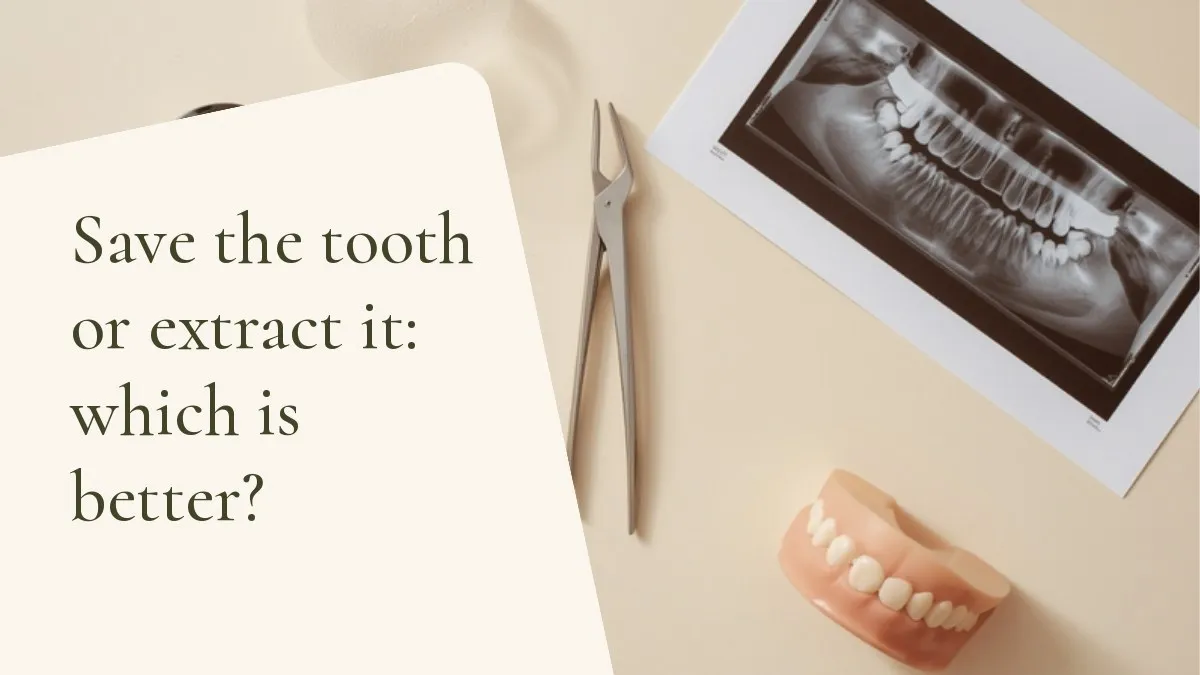
Whenever possible, dentistry tries to keep the natural tooth. Extraction is usually indicated when the tooth is too damaged to be restored, when the root is fractured, when there is major bone loss from gum disease, when an infection cannot be treated another way, when a poorly positioned wisdom tooth is causing problems or, in some cases, as part of orthodontic or prosthetic planning.
Before the procedure, the dentist performs a clinical exam, reviews your general health and, when needed, requests imaging such as an X-ray to see the shape of the roots and how close they are to nearby structures. Tell the dentist about every medication you take, especially blood thinners, and about conditions such as diabetes, high blood pressure, heart problems or pregnancy. Never stop a medication on your own: when that is necessary, it is decided by your physician together with the dentist.
In a simple extraction, with the tooth visible in the mouth, the dentist gives local anesthesia, waits for it to work, loosens the tooth from the ligament holding it to the bone with controlled movements and removes it. You will usually feel pressure and movement, but not sharp pain. A surgical extraction is used when the tooth is impacted, broken at the root or has curved roots: the gum may need to be opened, a little bone removed or the tooth divided into sections. Impacted wisdom teeth often fall into this group; see when to remove wisdom teeth.
At the end, the dentist cleans the socket (the space where the tooth was), compresses the area, places stitches if needed and gives you gauze to bite on. You then receive written instructions and, if appropriate, a prescription. Non-dissolving stitches are usually removed after about a week. If the missing tooth will affect your bite or appearance, it is worth discussing replacement with an implant or prosthesis, which is planned after healing.
| Period | What to expect | Main care |
|---|---|---|
| First hours | Light bleeding, anesthesia wearing off | Bite on gauze, rest, cold or lukewarm foods |
| First 24 to 48 hours | Pain and swelling at their peak | No hard rinsing, no spitting, no straw, no smoking |
| 3 to 7 days | Pain and swelling decreasing | Soft foods, chew on the other side, careful hygiene; stitch removal if needed |
| 1 to 2 weeks | Gum closing over the socket | Gradually return to a normal diet |
| A few months | Bone remodeling at the site | Plan an implant or prosthesis, if indicated |
Aftercare: food, hygiene, kissing and healing
First 24 hours: bite firmly on the gauze for as long as your dentist advised and replace it if it gets soaked. A little blood mixed with saliva on the first day is expected. Do not rinse hard, spit, use a straw or smoke, because suction and pressure can dislodge the clot. Keep your head slightly raised when sleeping and avoid intense exercise for the first few days. Cold compresses, always wrapped in a cloth and placed on the outside of the face, in intervals, may help with swelling when your dentist recommends them; never put ice directly on the skin or inside the mouth.
What to eat after a tooth extraction: on the first day, choose cold or lukewarm soft foods without hard bits, such as yogurt, smoothies eaten with a spoon, mashed potatoes, lukewarm soups and broths, scrambled eggs, porridge, jelly and smooth ice cream. Over the next days, move on to well-cooked rice, pasta, fish and shredded meat, always chewing on the opposite side. For a few days, avoid very hot, spicy, acidic or crunchy foods, small seeds and grains that can get into the socket, such as popcorn and nuts, and alcohol.
Hygiene: brush your other teeth as usual on the day of the extraction, with a soft brush and care near the treated area. Gentle rinses are usually allowed from the next day, according to the instructions you received. Can you kiss after a tooth extraction? A light kiss is usually fine, but kissing with tongue and suction is better postponed for a few days, until the pain and bleeding have passed, to protect the clot and avoid contamination. For pain, use pain relievers only as advised by your physician, dentist or pharmacist and according to the package leaflet; do not put tablets, alcohol or home remedies on the wound.
Pain and swelling are expected to peak in the first two days and then decrease. See your dentist if the pain starts increasing again after two to four days, if there is a strong bad taste or the socket looks empty, signs that may indicate dry socket (alveolar osteitis), or if bleeding does not stop with gauze pressure. Fever, swelling that spreads to the neck or eye, or difficulty swallowing or breathing require going to the emergency room immediately. Consult a dentist whenever something seems unusual. In Mooca, Dr. Cléo Salustiano sees patients every day, from 8 a.m. to 10 p.m., including Sundays and holidays, for general dentistry and dental emergencies in Mooca.
Does a tooth extraction hurt?
+
During the procedure, local anesthesia blocks pain; it is common to feel pressure and movement. Once it wears off, some discomfort is expected, mostly in the first two days. It is usually managed with the instructions and any medication recommended by the professional.
What can I eat after a tooth extraction?
+
On the first day, cold or lukewarm soft foods: yogurt, mashed potatoes, lukewarm broth, scrambled eggs, porridge and smooth ice cream. Then move on to soft foods such as rice, pasta and shredded meat, chewing on the other side. Avoid hot, crunchy, spicy foods and small seeds for a few days.
Can I kiss after a tooth extraction?
+
A light kiss is usually fine. Kissing with tongue and suction is better postponed for a few days, until pain and bleeding have passed, because suction can dislodge the clot and saliva carries bacteria to the wound.
How long does an extraction take to heal?
+
The gum usually closes in one to two weeks, and the bone keeps remodeling for a few months. Surgical extractions, such as impacted wisdom teeth, may take a little longer. Smoking, uncontrolled diabetes and poor aftercare can slow healing.
When can I brush and rinse?
+
You can brush your other teeth on the same day, with a soft brush and care near the treated area. Rinses should be gentle and are usually allowed from the next day, according to your dentist's instructions.
Is bleeding normal after an extraction?
+
Yes, a little blood mixed with saliva on the first day is expected. If bleeding is continuous, bite on clean gauze with firm pressure for a while. If it still does not stop, contact your dentist or an emergency service.
Where can I have a tooth extraction in Mooca?
+
In Mooca, Dr. Cléo Salustiano (CRO-SP 170844) sees patients at Rua Hipódromo, 1141, Monday to Sunday, from 8 a.m. to 10 p.m., including holidays. The first step is an assessment to confirm the extraction is really indicated. Appointments via WhatsApp (11) 97409-7834, in Portuguese, English or Spanish.