 Dra. Cléo Salustiano
 In this article
SummaryWhy does diet matter after whitening?What to eat, what to avoid and for how longFAQRead nextWhat to eat (and avoid) after teeth whitening
Book your teeth whitening assessment on WhatsAppPrefer not to wait for a reply? Book online now, no phone call needed: see the open times and pick yours, any time (booking page in Portuguese).
Quick summary of this article+
After whitening, teeth are temporarily more porous and prone to picking up pigment, so it's worth following the "white diet" for the first few days: choose light-colored foods (rice, chicken, fish, white cheeses, water) and avoid those that stain (coffee, wine, tea, dark sodas, tomato sauce, beets) as well as cigarettes. The care is temporary (about 24–48 hours per session, extending over the first few days). In Mooca, Dr. Cléo Salustiano (CRO-SP 170844) sees patients every day, 8 a.m. to 10 p.m.
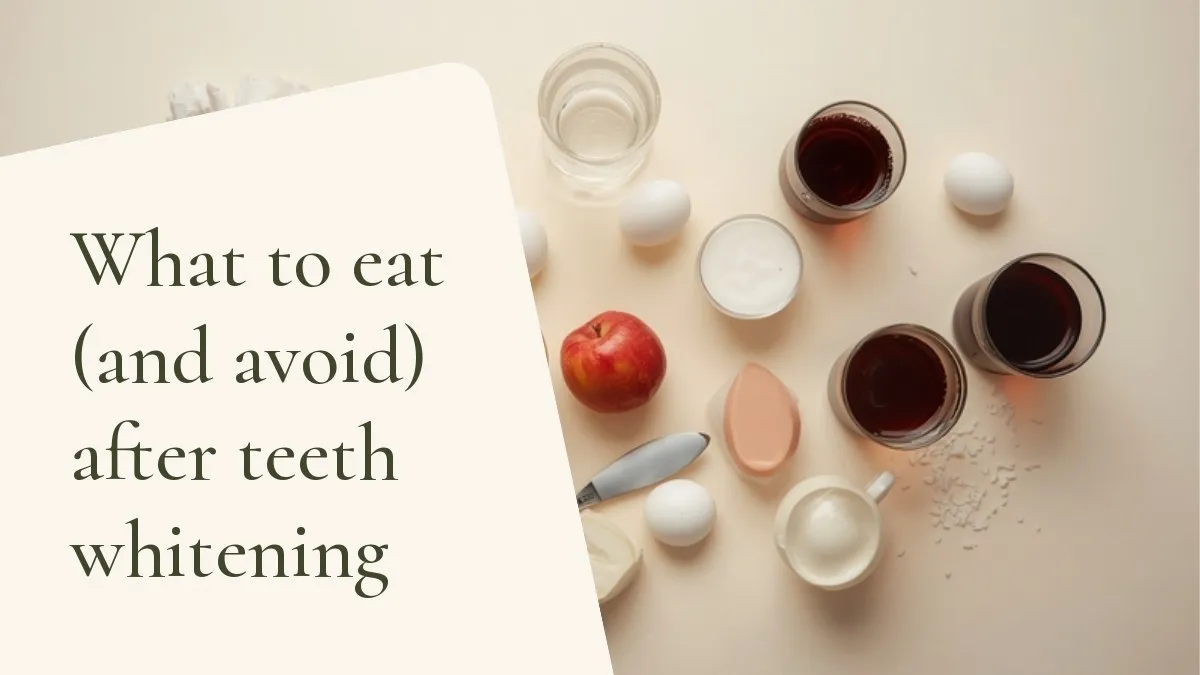
What should you eat (and avoid) after teeth whitening? For the first few days, it's worth following the so-called "white diet": choosing light-colored foods and avoiding those that stain, because teeth are more porous and prone to picking up pigment right after whitening. It's a simple, temporary precaution that helps the result settle in.
In practice, it's common for patients to put effort into whitening and then, the same day, have a coffee or a glass of wine — and be puzzled by the result. Those first days are exactly when teeth are most prone to staining. Knowing what to eat and for how long makes a real difference.
In this article, Dr. Cléo Salustiano (CRO-SP 170844) explains why diet matters after whitening, what to choose, what to avoid and for how long. Since every case is different, your dentist's guidance should be your main reference.
This article comes from Dr. Cléo Salustiano's dental office in Mooca, São Paulo (care in English, Portuguese and Spanish). See the teeth whitening page to learn how the treatment is done here and book your assessment.
Why does diet matter after whitening?
Right after whitening, teeth are temporarily more porous and dehydrated, which makes them more likely to absorb pigment. It's a window when anything that stains can set in more easily — so the first few days call for extra attention to what you eat.
This porosity is temporary: the tooth "rehydrates" and the surface rebalances over the following days. That's why the dietary care isn't forever — it's concentrated in the critical period right after each session, as your dentist advises.
The logic of the "white diet" is simple: if a food would stain a white T-shirt, it can probably mark your teeth during this period. Coffee, red wine, black tea, dark sodas, tomato sauce, beets, turmeric and berries are classic examples.
Cigarettes deserve special mention: besides staining heavily, they undermine the result and your oral health overall. During this period (and ideally beyond), cutting down or quitting smoking does a lot to protect your whitening.
It's not just the color of the food that counts. Acidic drinks (sodas, citrus) also call for moderation, because acidity can increase the temporary sensitivity of freshly whitened teeth. Water is always your safest companion during this period.
In short, the first days after whitening are key for the result to settle in. A small, temporary bit of care with your diet keeps you from staining what you just whitened.
| What to choose | What to avoid | |
|---|---|---|
| Drinks | Water, milk, white tea | Coffee, black tea and yerba mate, red wine, dark and colored sodas, grape and berry juices |
| Proteins | Chicken, fish, eggs, white cheeses | Dishes with dark or heavily spiced sauces |
| Sides | Rice, pasta without red sauce, potatoes | Tomato sauce, beets, turmeric and curry |
| Fruit and dairy | Bananas, peeled apples, plain yogurt | Berries and chocolate |
| Cigarettes | — | Stain heavily and harm the gums |
| For how long | Extra care for about 24 to 48 hours after each session, with attention over the first few days | — |
| If you can't avoid it | Use a straw for dark drinks and rinse your mouth afterward | — |
What to eat, what to avoid and for how long
What to choose: light-colored foods such as rice, pasta without red sauce, chicken, fish, potatoes, eggs, white cheeses, plain yogurt, bananas, peeled apples and water. The idea is to put together a menu with "no strong colors" for the first few days.
What to avoid: coffee, black tea and yerba mate, red wine, dark sodas (and colored ones, like grape and orange), grape and berry juices, tomato sauce, beets, turmeric, curry, chocolate and heavily spiced or brightly colored foods.
For how long: extra care is usually recommended for about 24 to 48 hours after each session, with continued attention over the first few days, as your dentist advises. Each protocol can vary — follow what your dentist recommends.
Practical tips: if you can't avoid something that stains, use a straw for dark drinks (it reduces contact with your front teeth) and drink water right afterward to "rinse away" pigment. Brushing or rinsing after meals also helps.
Watch for sensitivity: during these days, avoiding very hot or very cold foods helps reduce the discomfort that's common after whitening. Room-temperature foods are usually more comfortable.
Finally, dietary care is only one part: thorough hygiene, sticking to the treatment intervals and following the recommended maintenance are what preserve the result long term. The white diet helps the result settle in; your habits keep it.
What is the "white diet" after whitening?
+
It means choosing light-colored foods and avoiding those that stain during the first few days after whitening, when teeth are more porous and prone to picking up pigment. The rule of thumb: if it would stain a white T-shirt, avoid it. It's a simple, temporary precaution.
What can I eat after teeth whitening?
+
Light-colored foods: rice, pasta without red sauce, chicken, fish, potatoes, eggs, white cheeses, plain yogurt, bananas, peeled apples and water. The idea is a menu with "no strong colors" for the first few days, until the teeth rebalance.
What should I avoid after teeth whitening?
+
Coffee, black tea, red wine, dark and colored sodas, grape and berry juices, tomato sauce, beets, turmeric, curry, chocolate and cigarettes. All of them can stain freshly whitened teeth, which are more prone to picking up pigment.
How long do I need to follow the diet?
+
Extra care is usually recommended for about 24 to 48 hours after each session, with continued attention over the first few days. Each protocol varies — follow your dentist's guidance. After that period, your diet gradually goes back to normal.
Can I drink coffee after teeth whitening?
+
It's better to avoid it for the first few days, because coffee stains a lot and your teeth are more susceptible. If you can't skip it, use a straw and drink water afterward. Once the critical period is over, you can have it again, ideally in moderation to preserve the result.
Why are teeth more prone to staining afterward?
+
Because whitening leaves teeth temporarily more porous and dehydrated, making it easier to absorb pigment. This porosity is temporary: the teeth rebalance over the following days, which is why dietary care is concentrated at the beginning.
Does smoking affect teeth whitening?
+
A lot. Besides staining heavily, cigarettes undermine the result and your oral health. In the period after whitening (and ideally beyond), cutting down or quitting smoking is one of the most helpful things you can do for your smile.
Can I use a straw to avoid staining?
+
Yes, it helps. A straw reduces contact between dark drinks and your front teeth. Drinking water right afterward also rinses away some of the pigment. These are useful tricks when you need to have something that stains during the care period.
Can I have acidic foods?
+
Better to keep them moderate. Acidity (sodas, citrus) can increase the temporary sensitivity of freshly whitened teeth and contribute to wear. Water is your safest companion during this period. If you have something acidic, avoid brushing right afterward.
What if I eat something colorful by accident?
+
Don't panic: a one-off slip usually won't ruin the result. Drink water, brush or rinse, and go back to the care routine. What matters is the pattern over the first few days, not a single isolated episode.
Do I need to avoid hot or cold foods?
+
For the first few days, avoiding very hot or very cold foods helps reduce the sensitivity that's common after whitening. Room-temperature foods are usually more comfortable. This is more about comfort than about color.
Does brushing after eating help?
+
It helps remove pigment, but avoid brushing right after acidic foods (wait a little). Keeping up thorough hygiene during this period protects the result. Rinsing with water is a good in-between step when you can't brush right away.
Does the white diet guarantee the result?
+
It helps the result settle in during the first few days, but it doesn't work on its own. Keeping up hygiene, following the treatment and doing the recommended maintenance are what preserve whitening long term. The diet helps it settle; your habits keep it.
Can I drink coffee with milk after whitening?
+
Even with milk, coffee has pigments that can stain during the first few days. Ideally, avoid it during the care period; if you do have it, use a straw and drink water afterward. Light coffee stains less than black, but it still calls for moderation at this stage.
Can I have clear soda after whitening?
+
The light color stains less, but soda is acidic, which can increase the sensitivity of freshly whitened teeth. So it's better to limit even clear sodas during this period and choose water. Acidity counts as much as color.
Where can I get guided teeth whitening in Mooca?
+
Dr. Cléo Salustiano (CRO-SP 170844) sees patients at Rua Hipódromo, 1141, in Mooca, São Paulo, Monday to Sunday, 8 a.m. to 10 p.m., in Portuguese, English and Spanish. The assessment determines the whitening approach and the aftercare guidance, including diet, for your case.