 Dra. Cléo Salustiano
 In this article
SummaryWhat's examined at a dental checkup?How often should you go, and why does it pay off?FAQRead nextDental Checkups: Why Get Them Regularly?
Book your general dentistry assessment on WhatsAppPrefer not to wait for a reply? Book online now, no phone call needed: see the open times and pick yours, any time (booking page in Portuguese).
Quick summary of this article+
A dental checkup is the routine visit in which the dentist assesses the teeth, gums, bite and soft tissues of the mouth to catch problems early, while they're simple to fix. Since most oral problems start silently, regular checkups are prevention — they catch early cavities, gingivitis and other issues before they progress. The most commonly cited frequency is every six months, but it's individual. It usually comes with a dental cleaning. Prevention pays off in comfort, time and cost. In Mooca, Dr. Cléo Salustiano (CRO-SP 170844) sees patients every day from 8 a.m. to 10 p.m.
A dental checkup is the routine visit in which the dentist assesses the health of your whole mouth — teeth, gums, bite and soft tissues — to catch problems early, while they're still simple to fix. Like a medical checkup, it's prevention: most oral problems start silently, without pain, and regular checkups are what catch them early. Preventing is always simpler than treating.
In practice, people often only see a dentist once something hurts — and pain is usually a sign that a problem has progressed. Checkups flip that logic: instead of reacting to pain, you get ahead of it. It's the difference between a small filling and a root canal.
In this article, Dr. Cléo Salustiano (CRO-SP 170844) explains what's examined at a checkup, how often to go and why prevention pays off so much. Since every case is different, the assessment determines the right checkup frequency for you.
This article comes from Dr. Cléo Salustiano's dental office in Mooca, São Paulo (care in English, Portuguese and Spanish). See the general dentistry page to learn how the treatment is done here and book your assessment.
What's examined at a dental checkup?
The checkup starts with the teeth: the dentist looks for cavities (including early ones and those hidden between teeth) and checks old fillings, cracks, wear and sensitivity. Catching a cavity early means much simpler treatment.
The gums are examined too: signs of inflammation (redness, swelling, bleeding), tartar buildup, recession and periodontal pockets. Gum disease is usually silent, and the checkup is what identifies it before it progresses.
The bite and jaw joint are part of the assessment: how the teeth fit together, signs of bruxism (clenching or grinding), wear and issues with the jaw joint. These details affect health and comfort in the long run.
Examining the soft tissues of the mouth (tongue, cheeks, roof of the mouth, gums) is an important part of the checkup: the dentist looks for changes that need monitoring. This careful look is one of the reasons regular checkups are so valuable.
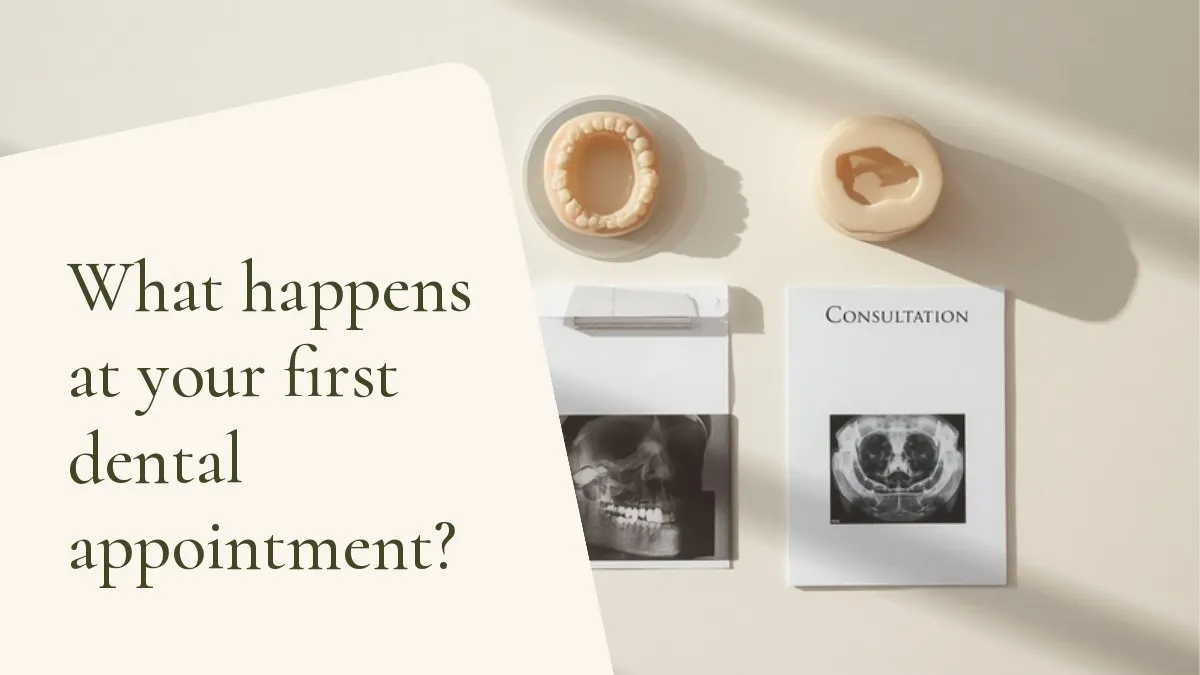
When needed, supporting exams (such as X-rays) complement the checkup, revealing what can't be seen with the naked eye — cavities between teeth and the condition of roots and bone. The dentist orders these exams case by case, not as a fixed routine for everyone.
In short, a checkup is a complete look at the mouth: teeth, gums, bite and tissues. It's a preventive assessment that catches early what, if left for later, would become a bigger problem. That's why regularity makes such a difference.
| Area examined | What the dentist looks for |
|---|---|
| Teeth | Cavities — including early ones and those hidden between teeth — old fillings, cracks, wear and sensitivity |
| Gums | Redness, swelling, bleeding, tartar buildup, recession and periodontal pockets |
| Bite and jaw joint | How the teeth fit together, signs of bruxism, wear and issues with the jaw joint |
| Soft tissues of the mouth | Tongue, cheeks, roof of the mouth and gums |
| Along with the checkup | Professional cleaning, which removes tartar that brushing can't |
| Frequency | Usually every six months, more often for people who build up a lot of tartar, smoke or have gum disease |
| Why it pays off | Early cavities, gingivitis and failing fillings are simpler to fix when caught early |
How often should you go, and why does it pay off?
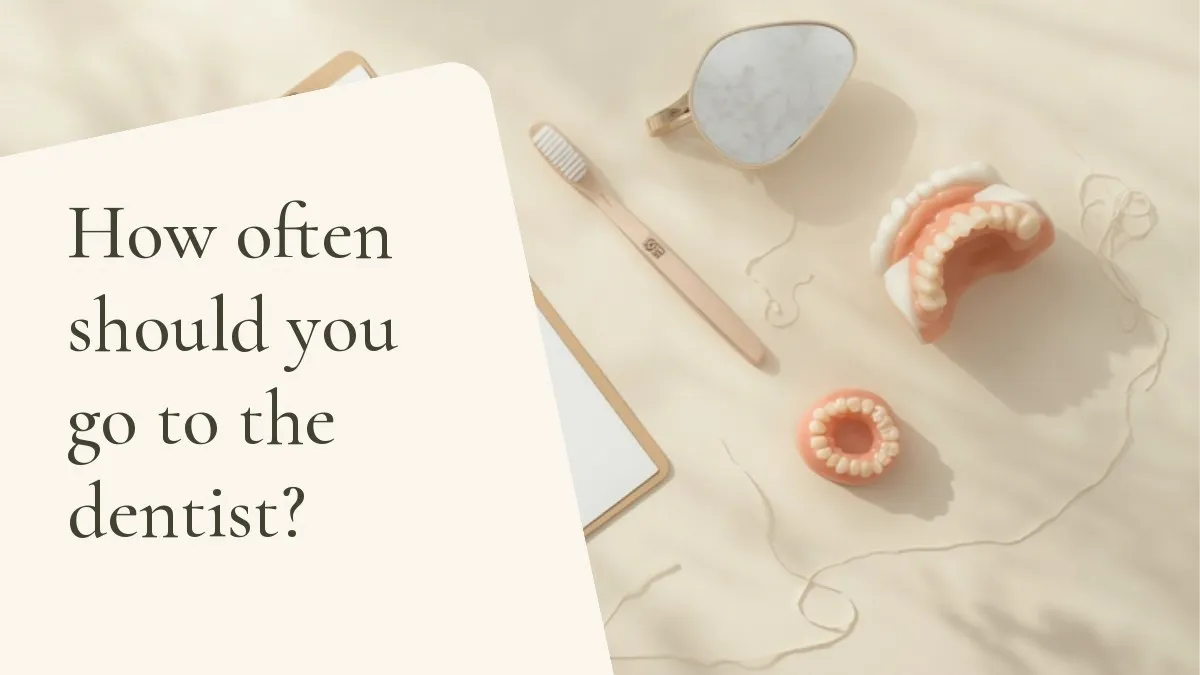
The most commonly cited frequency is every six months, but it's individual. People with good oral health and few risk factors may space visits out a bit; people who build up a lot of tartar, smoke, have gum disease or other conditions may need more frequent checkups.
The big advantage of a checkup is early detection. Early cavities, gingivitis, fillings that are starting to fail — all of these are simpler and more comfortable to treat when caught early. Waiting for pain usually means the problem has already progressed.
A checkup usually goes together with a professional dental cleaning, which removes tartar that brushing can't. Together, the assessment and the cleaning form the foundation of prevention: one handles diagnosis, the other keeps your mouth healthy.
Prevention pays off in comfort, time and cost. Keeping up with checkups tends to mean smaller treatments and fewer interventions over a lifetime — it's the difference between a routine visit and complex treatment down the road.
The checkup is also the time to get hygiene guidance and ask questions: the right brushing and flossing technique for you, habits to adjust, signs to watch for. This personalized follow-up is part of what makes checkups so useful.
Finally, if it's been a long time since you've seen a dentist, there's no reason to feel embarrassed — what matters is getting back on track. A checkup brings your oral health up to date and, from there, sets the right checkup frequency for your case.
This topic is part of our content on general dentistry in Mooca, where I walk through each step and the care involved.
What is a dental checkup?
+
It's the routine visit in which the dentist assesses the health of your whole mouth — teeth, gums, bite and soft tissues — to catch problems early, while they're still simple to fix. It's prevention: it catches early cavities, gingivitis and other issues before they progress.
How often should I get a checkup?
+
The most commonly cited frequency is every six months, but it's individual. People with good oral health may space visits out a bit; people who build up a lot of tartar, smoke or have gum disease may need more frequent checkups. The assessment determines the right frequency for you.
What's examined at a checkup?
+
The teeth (cavities, fillings, cracks, wear), the gums (inflammation, tartar, recession), the bite and jaw joint (bruxism, how teeth fit) and the soft tissues of the mouth (tongue, cheeks, roof of the mouth). When needed, exams such as X-rays complement it.
Do I need to see a dentist even without pain?
+
Yes. Most oral problems start silently, without pain — by the time pain appears, the problem has usually progressed. Regular checkups catch things early, before pain, and that's exactly why prevention pays off so much.
Does a checkup include a cleaning?
+
It usually comes with one. A professional cleaning removes tartar that brushing can't, and the checkup handles diagnosis. Together, the assessment and the cleaning form the foundation of prevention — one handles diagnosis, the other keeps your mouth healthy.
Can a checkup find hidden cavities?
+
Yes, it helps. The clinical exam identifies many cavities, and, when needed, X-rays reveal those between teeth or in places you can't see with the naked eye. Catching them early means much simpler treatment.
Why does prevention pay off?
+
Because problems caught early are simpler, more comfortable and less costly to treat. Keeping up with checkups tends to mean fewer interventions over a lifetime — it's the difference between a small filling and a root canal, for example.
Does a checkup look at the gums?
+
Yes, it's an essential part. The dentist checks for signs of inflammation (redness, swelling, bleeding), tartar, recession and pockets. Since gum disease is usually silent, the checkup is what identifies it before it becomes something more serious.
Do children need dental checkups?
+
Yes. Regular checkups in childhood follow tooth development, prevent cavities and build good habits early. The frequency and approach are adapted to the child's age. The assessment determines the right follow-up for the child.
I haven't seen a dentist in years. What now?
+
What matters is getting back on track, without embarrassment. A checkup brings your oral health up to date: it assesses what needs attention, includes a cleaning and, from there, sets the right checkup frequency. The sooner you return, the simpler it usually is.
Does a dental checkup hurt?
+
No. A checkup is an assessment — a clinical exam and, when needed, supporting exams. The cleaning that usually goes with it is generally comfortable. If the assessment finds something to treat, the dentist explains the next steps and how they'll be done.
Are X-rays part of a checkup?
+
When needed. X-rays complement the exam, revealing cavities between teeth and the condition of roots and bone. There's no fixed routine that's the same for everyone — the dentist orders exams based on your case and needs.
Do smokers need more frequent checkups?
+
They usually benefit from them. Smoking encourages tartar, worsens gum disease and masks bleeding, and it's a risk factor that calls for attention to the soft tissues of the mouth. That's why smokers tend to need more frequent checkups, set at the assessment.
Is a checkup useful for people who want cosmetic treatment?
+
Yes, it's the starting point. Before whitening or veneers, the checkup confirms the foundation is healthy (gums, cavities, bite), because cosmetic work relies on good health. People considering cosmetic treatment usually start with a complete assessment.
Where can I get a dental checkup in Mooca?
+
Dr. Cléo Salustiano (CRO-SP 170844) sees patients at Rua Hipódromo, 1141, in Mooca, São Paulo, Monday to Sunday, 8 a.m. to 10 p.m., in Portuguese, English or Spanish. The checkup assesses your overall oral health and sets the right checkup frequency for your case.