 Dra. Cléo Salustiano
 In this article
SummaryHow often should you go to the dentist?Why not wait until it hurts to see the dentist?FAQRead nextHow often should you go to the dentist?
Book your general dentistry assessment on WhatsAppPrefer not to wait for a reply? Book online now, no phone call needed: see the open times and pick yours, any time (booking page in Portuguese).

Quick summary of this article+
The general recommendation is to see the dentist every six months for a checkup and cleaning, but the interval is individual: a history of cavities, gum disease, braces, smoking or diabetes can shorten it. Regular visits catch problems early, before they hurt, when treatment is simpler and less expensive. Not waiting for pain is the key. In Mooca, Dr. Cléo Salustiano (CRO-SP 170844) sees patients every day, 8 a.m. to 10 p.m.
How often should you go to the dentist? The general recommendation is every six months, for a checkup and cleaning — but the right interval is individual: some people need to go more often and others can space visits out a bit, depending on their oral health and risk factors. What matters is staying consistent, not waiting for pain to show up.
In clinical practice, it's very common for patients to see a dentist only once something already hurts — and by then, the problem is usually more advanced. The point of regular visits is exactly the opposite: to catch everything early, when treatment is simple.
In this article, Dr. Cléo Salustiano (CRO-SP 170844) explains how often to see the dentist, what changes that interval and why prevention pays off. Since every case is different, your ideal frequency is set during your assessment.
This article comes from Dr. Cléo Salustiano's dental office in Mooca, São Paulo (care in English, Portuguese and Spanish). See the general dentistry page to learn how the treatment is done here and book your assessment.
How often should you go to the dentist?
The most common recommendation is a checkup every six months, usually along with a dental cleaning. That interval works well for most people with good oral health — it's enough time to catch early cavities, gum changes and other signs before they progress.
But six months is an average, not a rule for everyone. People with a history of frequent cavities, periodontal disease, braces, smokers, people with diabetes or other conditions often need more frequent visits — every three or four months, as advised.
On the other hand, people with excellent hygiene, low cavity risk and healthy gums may, in some cases, space visits out a little more, always with professional follow-up. The interval is adjusted to your risk profile, not a one-size-fits-all rule.
Children follow their own logic: visits usually start early (when the first teeth come in), and the dentist sets the frequency based on age and cavity risk, including hygiene guidance and, when indicated, fluoride application.
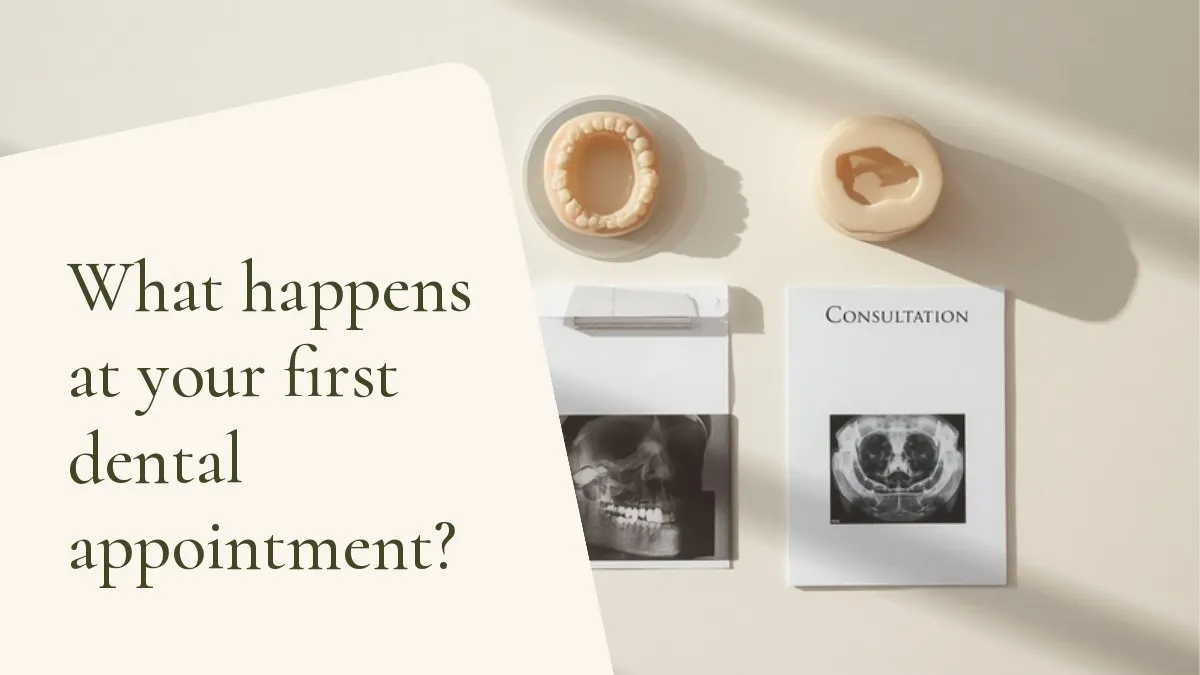
A checkup isn't just "looking at your teeth": it includes a gum exam, a bite assessment, checking old fillings, screening for lesions and, when indicated, X-rays. It's a thorough review that sees what you can't see in the mirror.
That's why the ideal frequency is set individually. During the assessment, the dentist considers your history, your risk of cavities and gum disease, your habits and any treatments (braces, implants, veneers) that need follow-up.
| Profile | Usually recommended interval |
|---|---|
| Good oral health and few risk factors | About every six months, with a checkup and cleaning |
| History of frequent cavities | Every three or four months, as advised |
| Periodontal disease | More frequent maintenance |
| People with braces | More frequent visits |
| Smokers | More frequent visits |
| People with diabetes | More frequent visits |
| Excellent hygiene, low cavity risk and healthy gums | May space visits out a bit, with follow-up |
| People with whitening, veneers or implants | Periodic follow-up to maintain the result |
Why not wait until it hurts to see the dentist?
The main reason to keep regular visits is simple: most oral problems are silent at first. Cavities, gum disease and other changes usually don't hurt while they're small. When pain shows up, the problem has generally progressed — and treatment becomes more complex.
Going only when it hurts tends to cost more and take longer. An early cavity may need just a small filling; left to progress, it can lead to a root canal or even losing the tooth. Prevention trades big treatments for small care.
Regular visits also keep your cleanings up to date, removing the tartar your toothbrush can't reach and that keeps gums inflamed. The combination of checkups and cleanings is what supports oral health over time.
If you have cosmetic treatments (whitening, veneers) or restorative work (implants, dentures), follow-up is even more important: it's what protects your investment and keeps everything working and looking good for longer.
Between appointments, the foundation is home care: gentle brushing along the gumline and daily flossing. Visits don't replace everyday care — they complement it and correct course when needed.
A practical tip: book your next appointment before you leave, based on the interval recommended for you. That way, prevention doesn't get put off until "whenever" — and "whenever" usually turns into "when it hurts."
If you'd like the full picture, it's all on the general dentistry page.
How often should I go to the dentist?
+
The general recommendation is every six months, for a checkup and cleaning, but the interval is individual. People at higher risk of cavities or gum disease may need to go more often. Your assessment determines the right interval for you.
Is six months right for everyone?
+
It's a good average for people with good oral health, but it's not a fixed rule. Some need to go every three or four months; others can space visits out a bit, with follow-up. The dentist adjusts it to your risk and history.
Can I just go when I'm in pain?
+
It's not ideal. Most oral problems are silent at first and only hurt once they've progressed. Going only when it hurts usually means bigger, longer and more expensive treatments. Regular visits catch things early.
What is a dental checkup for?
+
To examine your teeth, gums and bite, check fillings, screen for lesions and, when indicated, take X-rays — plus the cleaning. It's a thorough review that sees what you can't see in the mirror, so problems can be addressed before they progress.
At what age should a child first see the dentist?
+
Early, usually when the first teeth come in, and then as the dentist advises. Early visits focus on prevention, hygiene guidance and building a good relationship with dental care. The frequency is individual.
Do people with braces go more often?
+
Generally, yes. Orthodontic treatment requires follow-up and periodic adjustments, and braces make plaque build up more easily, so more frequent cleanings matter. The orthodontist sets the interval during treatment.
Do smokers need to go more often?
+
They usually do. Smoking increases the risk of gum disease and masks signs like bleeding, so more frequent follow-up helps catch problems early. Cutting back or quitting also greatly benefits oral health.
If I don't feel anything, do I still need to go?
+
Yes. "Not feeling anything" doesn't mean everything is fine — many problems are silent. Regular checkups exist precisely to confirm your health and catch changes early. Waiting for symptoms means risking letting something progress.
Does going to the dentist regularly save money?
+
It tends to, in the long run. Treating a small cavity is simpler and less expensive than a root canal or replacing a lost tooth. Prevention trades big treatments for small care. It's an investment that usually pays off.
How long does a checkup take?
+
It depends on what needs to be done, but it's usually fairly quick when your mouth is healthy. If there's a cleaning or other care, it takes a bit longer. What matters is consistency, not the length of each visit.
Do I need X-rays every time?
+
Not necessarily. X-rays are taken when indicated, based on risk and what the clinical exam suggests — not automatically at every visit. The dentist decides when they're needed, avoiding unnecessary exams.
Is a cleaning part of the checkup?
+
It usually is. Checkups and cleanings generally happen at the same routine visit: the exam assesses your oral health, and the cleaning removes plaque and tartar. Together, they're the foundation of preventive care for your mouth.
I have veneers and implants: do I need follow-up?
+
Yes, and it's important. Cosmetic and restorative treatments last longer with regular follow-up, which checks gum health and the condition of the restorations and makes any needed adjustments. That's what protects your investment over time.
How do I know my ideal frequency?
+
Through your assessment. The dentist considers your history, your risk of cavities and gum disease, your habits and any ongoing treatments, and recommends the right interval for you. That frequency can change as your oral health evolves.
It's been a long time since I saw a dentist: now what?
+
The best thing is simply to start again, without guilt. An assessment checks how your oral health is doing and sets a plan to get everything back on track, at your own pace. The sooner you return, the simpler it usually is to address whatever has built up.
Where can I get a dental checkup in Mooca?
+
Dr. Cléo Salustiano (CRO-SP 170844) sees patients at Rua Hipódromo, 1141, in Mooca, São Paulo, Monday to Sunday, 8 a.m. to 10 p.m., in Portuguese, English and Spanish. The assessment sets the right checkup and cleaning schedule for your oral health.