 Dra. Cléo Salustiano
 In this article
SummaryWhat happens at your first dental appointment?How to prepare and what to expect afterward?FAQRead nextWhat happens at your first dental appointment?
Book your general dentistry assessment on WhatsAppPrefer not to wait for a reply? Book online now, no phone call needed: see the open times and pick yours, any time (booking page in Portuguese).
Quick summary of this article+
Your first dental appointment is usually an assessment, not a procedure visit: your dentist learns about your history and goals, examines your teeth, gums and bite, may order tests and proposes a treatment plan (health before aesthetics), transparently and without promising results. Bring your health information and questions; mention it if you feel afraid. Treatments are usually scheduled afterward. In Mooca, Dr. Cléo Salustiano (CRO-SP 170844) sees patients every day, 8 a.m. to 10 p.m.
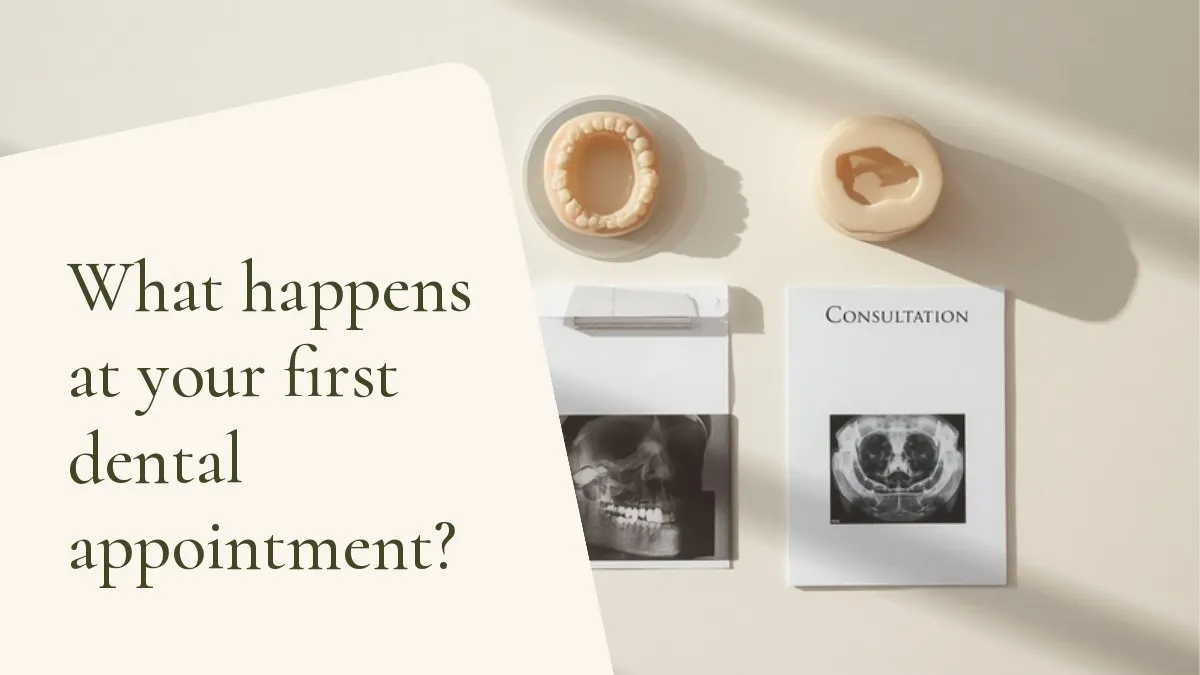
What happens at your first dental appointment? In general, it's a conversation and a full assessment: your dentist learns about your history and goals, examines your mouth, may order tests and, based on that, proposes a treatment plan, with no rush and no pressure to commit to everything on the spot. It's usually not a procedure visit but a diagnostic one.
In clinical practice, patients often arrive at their first appointment anxious, expecting to leave with 'everything fixed' or to have a procedure done in the chair. Most of the time, the first visit is precisely for understanding and planning. Knowing that takes the pressure off.
Here, Dr. Cléo Salustiano (CRO-SP 170844) explains what a first appointment usually looks like, what to bring, what happens and what to expect afterward. Every dentist has their own workflow, but the logic of assessing before treating is common and important.
This article comes from Dr. Cléo Salustiano's dental office in Mooca, São Paulo (care in English, Portuguese and Spanish). See the general dentistry page to learn how the treatment is done here and book your assessment.
What happens at your first dental appointment?
Your first dental appointment is usually an assessment. Your dentist talks with you about your health history and your goals, examines your teeth, gums and bite, and identifies what needs attention. It's the diagnostic moment, the foundation for any treatment.
The initial conversation (medical history) matters more than it seems: illnesses, medications, allergies, habits and complaints guide everything that follows. That's why it helps to bring this information organized. It allows your dentist to plan safely.
The clinical exam looks at each tooth, gum health, your bite and any previous fillings or dental work. When needed, imaging (X-rays) is ordered to show what can't be seen with the naked eye, such as cavities between teeth and the condition of the roots and bone.
Based on this, your dentist puts together a treatment plan: what needs to be done, in what order and with what alternatives. In general, health comes before aesthetics. For example, treating cavities and gums before thinking about whitening or veneers.
The plan is presented transparently: steps, alternatives and what to expect. Brazilian dental council rules (CFO/CRO) don't allow promises of results, so what you get is honest, individualized planning, not guarantees. You decide calmly, with no pressure.
Most of the time, procedures aren't done at this first visit (except for urgent cases, like pain). The first appointment is for understanding and planning; treatments are scheduled for the following visits, according to the agreed plan.
| Moment | What happens or what to bring |
|---|---|
| Before the appointment | Bring your health history: illnesses, medications, allergies, surgeries and recent tests |
| Before the appointment | Write down your concerns, goals and questions |
| Before the appointment | Bring records from previous treatments, such as X-rays and reports |
| Initial conversation (medical history) | Your history, habits and complaints guide everything that follows |
| Clinical exam | Each tooth, gum health, your bite and previous dental work |
| Imaging, when needed | Shows what the naked eye can't: cavities between teeth, roots and bone |
| At the end | A proposed treatment plan, with health before aesthetics |
| Decision | Doesn't have to be made on the spot |
| If you're afraid | Say so right at the start; the pace is adjusted |
How to prepare and what to expect afterward?
To make the most of your first appointment, bring your health information organized: illnesses, current medications, allergies, surgeries and recent tests, if you have them. Also write down your concerns and goals: what bothers you and what you'd like to improve in your smile.
If you have records from previous treatments (X-rays, reports), bring them. They help explain your history and can avoid repeat tests. The more your dentist knows, the better the planning.
Come with your questions written down. The first appointment is the time to ask everything: options, steps, aftercare, expectations. Good care means clear answers and respect for your time to decide. You don't have to commit to anything on the spot.
If you feel fear or anxiety, tell your dentist right at the start. Caring treatment adjusts the pace, explains each step and helps you feel safe. Talking about the fear is the first step to overcoming it, and it's far more common than people think.
After the appointment, you leave with a plan and, usually, with the next steps scheduled. It's worth reviewing the plan calmly at home, asking any questions that come up and following the hygiene instructions you received. Treatment is a partnership between you and your dentist.
Finally, think of the first appointment as the start of ongoing care, not a one-time event. From there, the frequency of checkups and the sequence of care are defined: the foundation for keeping your oral health over the long term.
If you'd like the full picture, I've gathered everything on the general dentistry in Mooca page.
What happens at the first dental appointment?
+
It's usually an assessment: your dentist talks about your history and goals, examines your mouth and proposes a treatment plan. In general, it's not a procedure visit but a diagnostic one, the starting point for any care.
Will I have a procedure done?
+
Most of the time, no. The first appointment is usually for understanding and planning; treatments are scheduled afterward. The exception is urgent cases, like pain, when something may be done for relief. You don't have to commit to anything on the spot.
What should I bring to my first appointment?
+
Organized health information: illnesses, medications, allergies, surgeries and recent tests. Also bring records from previous treatments, if you have them, and write down your concerns and questions. The more your dentist knows, the better the planning.
Do I need an X-ray at the first appointment?
+
It depends. X-rays are ordered when indicated, to see what the clinical exam can't show (cavities between teeth, roots, bone). They aren't always taken at the first visit; your dentist assesses the need based on your case.
What is the medical history (anamnesis)?
+
It's the initial conversation about your health history: illnesses, medications, allergies, habits and complaints. It seems simple, but it guides all the planning and protects your safety. That's why it helps to arrive with this information on hand.
Will I get a quote right away?
+
Usually the treatment plan is presented with its steps and alternatives, and the cost may be discussed depending on the practice. We don't discuss prices here, but what matters is that you understand what needs to be done and decide calmly, without pressure.
Does health come before aesthetics?
+
In general, yes. Treating cavities, caring for your gums and resolving functional issues usually come before whitening or veneers. This protects both the cosmetic result and your health. A good plan respects that order and explains why.
I'm afraid of the dentist. What now?
+
Tell your dentist right at the start. Caring treatment adjusts the pace, explains each step and helps you feel safe. Fear is common and shouldn't keep you from getting care; talking about it is the first step to overcoming it.
Can I bring my questions written down?
+
Yes, and it's recommended. The first appointment is the time to ask everything: options, steps, aftercare and expectations. Writing your questions down beforehand helps you not forget anything. Good care means clear answers and respect for your time.
How long does the first appointment take?
+
It varies with the case and the practice's workflow, but time is usually set aside for an unhurried conversation and exam. It's not a rushed visit: it's where the diagnosis and plan are built. What matters is leaving with clarity about the next steps.
Do I have to decide on treatment right away?
+
No. You can review the plan at home, ask questions and decide calmly. A good dentist doesn't pressure you. The goal of the first appointment is to inform and plan; the decision is yours, in your own time, based on what was explained.
Does it help to bring old test results?
+
Yes. X-rays and reports from previous treatments help explain your history and can avoid repeat tests. If you have access to them, bring them. They enrich the assessment and support more accurate planning.
Do children go through this assessment too?
+
Yes, adapted to their age. A child's first appointment focuses on prevention, hygiene guidance and building a good relationship with dental care. The dentist assesses development and sets the checkup frequency case by case.
What happens after the first appointment?
+
You leave with a plan and, usually, with the next steps scheduled. From there, the sequence of treatments and the frequency of checkups are defined. Think of the first appointment as the start of ongoing care, not a one-time event.
Where can I book a first appointment in Mooca?
+
Dr. Cléo Salustiano (CRO-SP 170844) sees patients at Rua Hipódromo, 1141, in Mooca, São Paulo, Monday to Sunday, 8 a.m. to 10 p.m., in Portuguese, English and Spanish. You can book through Doctoralia or WhatsApp, and the first conversation is about getting to know you, without rush.