 Dra. Cléo Salustiano
In this article
SummaryStep by stepHow does in-office whitening work, and how many sessions are needed?Does in-office whitening hurt, and what aftercare is needed?FAQRead nextIn-office teeth whitening: what the session is like, how many you need and aftercare

Quick summary of this article+
In-office whitening is applied by the dentist with a stronger gel and gum protection, sometimes activated by laser or LED. Many cases need one to three sessions. It usually does not hurt during application but may cause temporary sensitivity. For 48 hours afterwards, avoid pigmented foods and drinks. Fillings and veneers do not whiten.
In-office teeth whitening is applied by the dentist in the dental chair, using a stronger whitening gel than at-home kits. The gums are protected with a barrier, the gel stays on the teeth for a controlled time and, in some techniques, is activated by laser or LED light. The difference in shade is often noticeable after the first session.
In clinical practice, in-office whitening is popular with people who have a date in mind, such as a wedding, graduation or trip, and with those who prefer not to wear trays every day. Patients also ask about pain, how many sessions they will need and what they can eat afterwards, especially daily coffee drinkers.
In this article, Dr. Cléo Salustiano (CRO-SP 170844), who offers in-office laser whitening in Mooca, East Zone of São Paulo, explains what a session is like, how many are usually recommended and the care needed before and after.
This article comes from Dr. Cléo Salustiano's dental office in Mooca, São Paulo (care in English, Portuguese and Spanish). See the teeth whitening page to learn how the treatment is done here and book your assessment.
Step by step
- Assessment and cleaning. The dentist checks teeth and gums, treats cavities or leaks and usually performs a cleaning first. The starting shade is recorded with a shade guide and photo.
- Gum protection. A retractor keeps the lips apart and a protective barrier is applied over the gums so the gel does not touch soft tissue.
- Gel application. The whitening gel is applied to the visible surfaces of the teeth and left for the time recommended by the manufacturer, in one or more applications.
- Light activation, when indicated. In some techniques, a laser or LED light is positioned over the teeth to activate the gel. Light is not required in every technique and does not replace the gel.
- Removal and instructions. The gel and barrier are removed, the new shade is compared with the original and you receive guidance on sensitivity, diet and the next session, if any.
How does in-office whitening work, and how many sessions are needed?
In-office whitening uses a higher-concentration hydrogen peroxide gel, applied by the dentist with gum protection, which penetrates enamel and breaks down the pigments that darken teeth. The number of sessions depends on the starting shade, the type of stain and each person's response; many cases need one to three sessions a few days apart.
Its main advantages are speed and control: the dentist supervises the whole process, adjusts contact time and watches how teeth and gums react. Laser or LED light, used in some techniques, only activates the gel; it does not whiten by itself and is not part of every protocol.
Stubborn stains, such as gray discoloration from medication, may call for combined whitening with at-home trays, and a tooth darkened after a root canal is best treated with internal whitening. Fillings, veneers and crowns do not change color, so front-tooth restorations may need replacing afterwards to match.
Does in-office whitening hurt, and what aftercare is needed?
In-office whitening is usually painless during the session, but it can cause sensitivity, typically in the first 24 to 48 hours, felt as brief zings, especially with cold. It usually fades on its own; the dentist can use desensitizers, adjust application time and recommend a pain reliever if needed.
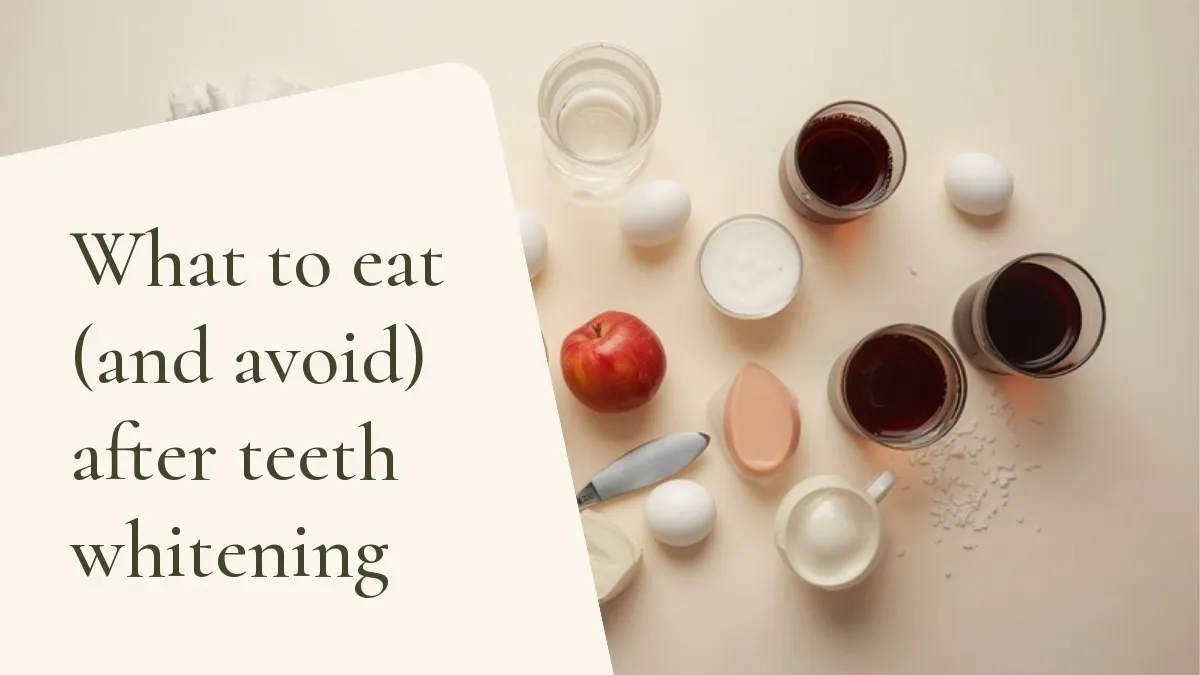
For the first 48 hours, teeth absorb pigments more easily, so avoid coffee, black tea, dark sodas, wine, açaí, beets, tomato sauce, soy sauce and artificially colored foods, as well as smoking. Light-colored foods such as rice, chicken, fish, potatoes, milk and light fruits are good choices. Whitening is not recommended during pregnancy or breastfeeding, or with untreated cavities, gum inflammation or leaking fillings.
In Mooca, Dr. Cléo Salustiano offers in-office laser whitening with an assessment first and shade records before and after, every day from 8 a.m. to 10 p.m., including Sundays and holidays, near Bresser-Mooca subway station, in Portuguese, English and Spanish.
How is in-office teeth whitening done?
+
The dentist assesses and cleans the teeth, protects the gums with a barrier, applies a stronger whitening gel and leaves it on for the recommended time, sometimes activated with laser or LED light. Then the gel is removed, the shade is compared with the starting one and instructions are given. A session usually takes about an hour.
How many in-office whitening sessions will I need?
+
It depends on the starting shade, the type of stain and how your teeth respond. Many cases need one to three sessions a few days apart. Stubborn stains may call for combined whitening with at-home trays. The estimate is given at the assessment and adjusted as treatment progresses.
Does in-office whitening hurt?
+
During the session it usually does not. Sensitivity may appear in the first 24 to 48 hours as brief zings, especially with cold, and usually fades on its own. The dentist can use desensitizers, adjust application time and recommend a pain reliever if needed.
What can't I eat after in-office whitening?
+
For the first 48 hours, avoid coffee, black tea, dark sodas, wine, açaí, beets, tomato sauce, soy sauce, chocolate and artificially colored foods, as well as smoking. Choose light-colored foods such as rice, chicken, fish, potatoes, milk and light fruits. This is when teeth absorb pigments most easily.
Is laser whitening the same as in-office whitening?
+
Laser whitening is one type of in-office whitening in which light activates the gel. Not every in-office technique uses light, and light does not whiten on its own; the gel does the work. What matters most is proper indication, controlled timing and gum protection.
Can I get in-office whitening before an event?
+
Yes, it is a common reason. Ideally start a few weeks ahead so there is time for the needed sessions and for any sensitivity to settle. If there are front-tooth restorations, they may need replacing afterwards, which takes extra time.
Where can I get in-office teeth whitening in Mooca, São Paulo?
+
In Mooca, Dr. Cléo Salustiano (CRO-SP 170844) sees patients at Rua Hipódromo, 1141, every day from 8 a.m. to 10 p.m., including Sundays and holidays. She offers in-office laser whitening with an assessment first and shade records before and after each session.