 Dra. Cléo Salustiano
 In this article
SummaryStep by stepWhat you're really paying for with self-ligating bracesWhen traditional braces are the smart choiceFAQRead nextAre Self-Ligating Braces Worth It?
Book your braces and clear aligners assessment on WhatsAppPrefer not to wait for a reply? Book online now, no phone call needed: see the open times and pick yours, any time (booking page in Portuguese).
Quick summary of this article+
Self-ligating braces are worth it when you value what they actually deliver: simpler cleaning (no elastic ties to trap plaque), no ties turning yellow between appointments — which matters especially with tooth-colored brackets — and less wire friction. They're not worth it if the decision rests on speed, less pain or fewer appointments: systematic reviews found no significant difference between self-ligating and traditional braces on those three points. Since the cost is usually higher, the investment makes more sense for people at risk of cavities or who find cleaning difficult, and for those who want tooth-colored brackets. In every case, the result depends more on the orthodontist than on the bracket.
Self-ligating braces are often presented as the "premium" version of fixed braces — and priced that way. The real question isn't whether they're good (they are), but whether the difference in cost is justified in your case.
The short answer: some of the advertised advantages are real and proven; others, the ones used most in marketing, don't hold up when you look at the scientific evidence. This article separates one from the other so you can decide based on information, not promises.
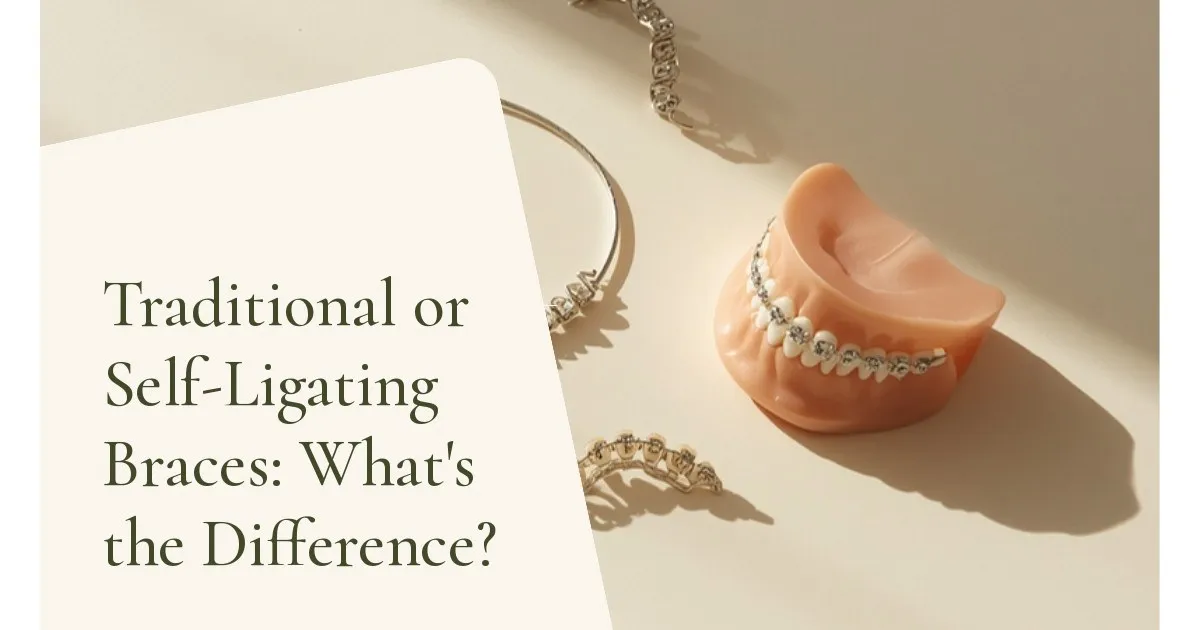
If you're not yet clear on the technical difference between the two systems, start with the article traditional or self-ligating braces: what's the difference?. This content is for information only and follows the rules of the Federal Council of Dentistry (CFO) and CRO-SP: no promised results and no advertised prices. Dr. Cléo Salustiano (CRO-SP 170844) sees patients at Rua Hipódromo, 1141, in Mooca, São Paulo.
This article comes from Dr. Cléo Salustiano's dental office in Mooca, São Paulo (care in English, Portuguese and Spanish). See the braces and clear aligners page to learn how the treatment is done here and book your assessment.
Step by step
- Understand what you're paying for. You're paying for simpler cleaning, no ties that turn yellow and less friction — not for speed. If the sales pitch is "you'll finish sooner," the argument is weak.
- Consider your risk and your hygiene routine. People with a history of cavities, who tend to build up plaque or who have had white spots around brackets before benefit most from having no elastic ties. For this profile, self-ligating braces are usually worth it.
- Decide whether you want tooth-colored brackets. With traditional tooth-colored brackets, the clear ties turn yellow between appointments — which undermines the very reason for choosing them. Tooth-colored self-ligating brackets solve this, because there are no ties.
- Ask for the treatment plan in writing. Ask for the planned stages, how often you'll come back and what's included with each system. Compare the difference in cost with the real benefit it brings to your case, without rushing.
- Choose the orthodontist before the bracket. What determines the result is the diagnosis, the planning and how the case is managed — not the brand or type of bracket. A well-planned treatment with traditional braces beats a poorly planned one with self-ligating braces.
What you're really paying for with self-ligating braces
A self-ligating bracket replaces the elastic tie (the little "rubber band") with a metal clip built into the bracket itself, which closes over the wire. That single structural change is the source of all the system's real benefits — and of all the exaggerated claims, too.
What you concretely get is: one less plaque-trapping surface around each bracket (the elastic tie is where plaque builds up most), no more yellowing of clear ties between appointments, and a lower-friction fit that lets the orthodontist work with lighter forces.
What you don't get — whatever you may hear — is speed, guaranteed comfort or fewer office visits. The table below compares each common claim with what studies show.
| Common claim | What the evidence shows | Weight in the decision |
|---|---|---|
| "Treats faster" | Systematic reviews found no significant difference in total treatment time compared with traditional braces | Shouldn't count |
| "Hurts less" | Studies found no significant difference in initial pain between the two systems | Shouldn't count |
| "Needs fewer appointments" | No proven significant difference in the number of appointments | Shouldn't count |
| "Easier to clean" | True: without the elastic tie, there's less plaque-trapping surface around the bracket | Counts in favor |
| "Doesn't turn yellow" | True: there's no elastic tie to stain between appointments | Counts in favor (especially with tooth-colored brackets) |
| "Less friction" | True: the clip lets the wire slide more freely in the slot | Technical benefit, managed by the orthodontist |
| Cost | Generally higher than traditional brackets | Counts against — weigh cost vs. benefit |
When traditional braces are the smart choice
Traditional braces remain an established, effective option that usually costs less. They tend to be the more rational choice when budget matters, when you keep up a good hygiene routine and have no history of cavities, and when metal brackets don't bother you cosmetically. For children and teens, colorful elastic ties are still a motivating factor that shouldn't be underestimated — an engaged patient is worth more than an expensive bracket.
The key point bears repeating: choosing the system isn't choosing the result. Systematic reviews comparing traditional, passive self-ligating and active self-ligating brackets found that the vast majority of variables studied showed no significant difference between them. What changes the outcome is an accurate diagnosis, good planning and patient cooperation — wearing elastics when prescribed, keeping up with hygiene and showing up for follow-ups.
Whatever you choose, the care is the same: brush after every meal with an orthodontic toothbrush, floss with a floss threader, watch out for hard and sticky foods that can knock off brackets, and keep your adjustment appointments. If a bracket comes loose or the end of the wire pokes you, contact your orthodontist rather than trying to fix it yourself. And at the end of treatment, wearing a retainer is what preserves the result — with any system.
Are self-ligating braces worth it?
+
They're worth it for people who benefit from what they really deliver: simpler cleaning (no elastic ties collecting plaque), no ties turning yellow and less wire friction. They're not worth it if you're expecting faster treatment, less pain or fewer appointments — the scientific evidence doesn't support those claims.
What are the real advantages of self-ligating braces?
+
The proven advantages are: less plaque buildup around the bracket (there's no elastic tie), no ties turning yellow between appointments, and less friction, which allows lighter forces.
What are the disadvantages of self-ligating braces?
+
The main one is cost, which is generally higher than traditional brackets. Also, the most advertised benefits — speed, less pain and fewer appointments — are not supported by scientific reviews.
Are self-ligating braces better than traditional braces?
+
It's not a matter of better or worse: both systems work for most cases. Self-ligating braces have the edge in hygiene and in how the ties look; traditional braces have the edge in cost. The treatment result depends on the orthodontist's diagnosis and planning, not the type of bracket.
Who are self-ligating braces best suited for?
+
They usually pay off more for people with a history of cavities, trouble keeping up with hygiene or white spots around brackets in the past, and for those choosing tooth-colored brackets — since there are no clear ties to turn yellow.
Do self-ligating braces justify the higher price?
+
It depends on your profile. If you fit the cases where the real benefits matter (cavity risk, difficult cleaning, tooth-colored brackets), the investment tends to make sense. If your hygiene is good and metal brackets don't bother you, traditional braces do the job well.
Do self-ligating braces make treatment faster?
+
There's no scientific proof of that. Systematic reviews found no statistically significant difference in total treatment time. How long treatment takes depends on the complexity of the case, the planning and the patient's cooperation.
Are there tooth-colored self-ligating braces?
+
Yes, there are ceramic and polycarbonate versions. This is exactly where self-ligating braces stand out: with traditional tooth-colored brackets, the clear ties tend to turn yellow between appointments, undermining the reason you chose them.
Do self-ligating braces hurt less?
+
Some patients report less discomfort, but studies don't show a consistent difference in pain compared with traditional braces. The soreness in the first few days after each adjustment happens with both types and usually eases with time and the care you're given.
Do self-ligating braces need fewer appointments?
+
In some cases the gap between appointments can be longer, but that depends more on the orthodontist's planning and the stage of treatment than on the type of bracket. Follow-ups are still needed for adjustments, wire changes and hygiene checks.
Is cleaning easier with self-ligating braces?
+
It can be a bit simpler, because there are no elastic ties around the brackets collecting plaque. Even so, brushing, interdental brushes and flossing with a threader remain essential throughout treatment.
Can I switch from traditional to self-ligating braces mid-treatment?
+
It's usually possible but rarely necessary, because the type of bracket doesn't typically change the final result. The orthodontist decides, considering the stage of treatment, the plan and the cost-benefit of switching.
Self-ligating braces or clear aligners?
+
They're different approaches. Self-ligating braces are fixed and don't depend on wearing discipline; aligners are removable and discreet but need to be worn about 22 hours a day. The choice depends on the case, the bite and the patient's routine.