 Dra. Cléo Salustiano
In this article
SummaryWhy do teeth become crowded?How to fix crowded teeth: braces, Invisalign and other careFAQRead nextCrowded Teeth: Causes and How to Fix Them

Quick summary of this article+
Crowded teeth, or dental crowding, occur when there is not enough room in the arch for all the teeth, due to genetics, early loss of baby teeth, childhood habits or the natural movement of teeth over time. Beyond appearance, crowding makes hygiene harder and favors decay and gum inflammation. It can be treated with fixed braces or clear aligners such as Invisalign, and the choice depends on an assessment. In children, the dentist assesses and, when needed, refers to an orthodontist or pediatric dentist. In Mooca, Dr. Cléo Salustiano (CRO-SP 170844) sees patients every day, from 8 a.m. to 10 p.m.
Crowded teeth, called dental crowding by dentists, happen when there is not enough room in the dental arch for all the teeth to line up, so they end up rotated, overlapping or pushed forward or backward. In most cases the problem can be treated with orthodontics, either with fixed braces or with clear aligners such as Invisalign. The choice depends on how severe the crowding is, the bite, age and each person's routine, and it is only made after an assessment.
In clinical practice, many people come in because of the look of their smile, but crowded teeth also make brushing and flossing harder. The spots where one tooth overlaps another collect plaque easily, which raises the risk of decay between teeth, inflamed gums and bad breath. That is why fixing crowding is often a health matter, not only an aesthetic one.
Dr. Cléo Salustiano (CRO-SP 170844), a dentist in Mooca, explains why teeth become crowded, which treatment options exist, how braces and aligners differ, and what parents should watch for when a child's tooth comes in crooked.
This article comes from Dr. Cléo Salustiano's dental office in Mooca, São Paulo (care in English, Portuguese and Spanish). See the braces and invisalign page to learn how the treatment is done here and book your assessment.
Why do teeth become crowded?
The most common cause is a mismatch between the size of the teeth and the size of the jaws. When the combined width of the teeth is greater than the space available in the arch, they cannot line up side by side and settle wherever they can: rotated, tilted or overlapping. This trait has a strong genetic component, which is why parents and children often share the same type of crowding.
Other factors also play a part. Losing baby teeth early, due to decay or trauma, can let neighboring teeth drift into the space meant for the permanent tooth that has not come in yet. Long-lasting childhood habits such as pacifiers, prolonged bottle use and thumb sucking, as well as mouth breathing, can affect how the arch grows. Baby teeth that do not fall out on time can also deflect the permanent tooth, which then erupts out of position.
In adults, crowding often appears or worsens over time, especially in the lower front teeth. This can happen to people who wore braces and stopped wearing their retainer, but also to people who never had braces, because teeth move slightly throughout life. Losing back teeth, gum disease and teeth grinding can also encourage this movement. The role of wisdom teeth in crowding is debated, and they are generally not considered the main cause.
Crowding is usually classified as mild, moderate or severe, according to how much space is missing. This classification, together with an analysis of the bite, facial profile and gum health, guides the treatment plan. The dentist examines the mouth and, when needed, requests X-rays, photos and impressions or a scan of the teeth to plan the correction safely.
| Situation | What it may mean | What to do |
|---|---|---|
| Teeth slightly rotated or overlapping | Mild crowding | Assessment to review options, including aligners |
| Several teeth out of the arch or heavily overlapping | Moderate or severe crowding | Full orthodontic planning |
| Lower teeth shifting years after braces | Natural movement or no retainer | Assessment; resume or adjust the retainer |
| Child's permanent tooth coming in behind the baby tooth | Baby tooth that did not fall out on time | Dental assessment |
| Gums bleeding between crowded teeth | Plaque build-up and inflammation | Better hygiene and a professional cleaning |
How to fix crowded teeth: braces, Invisalign and other care
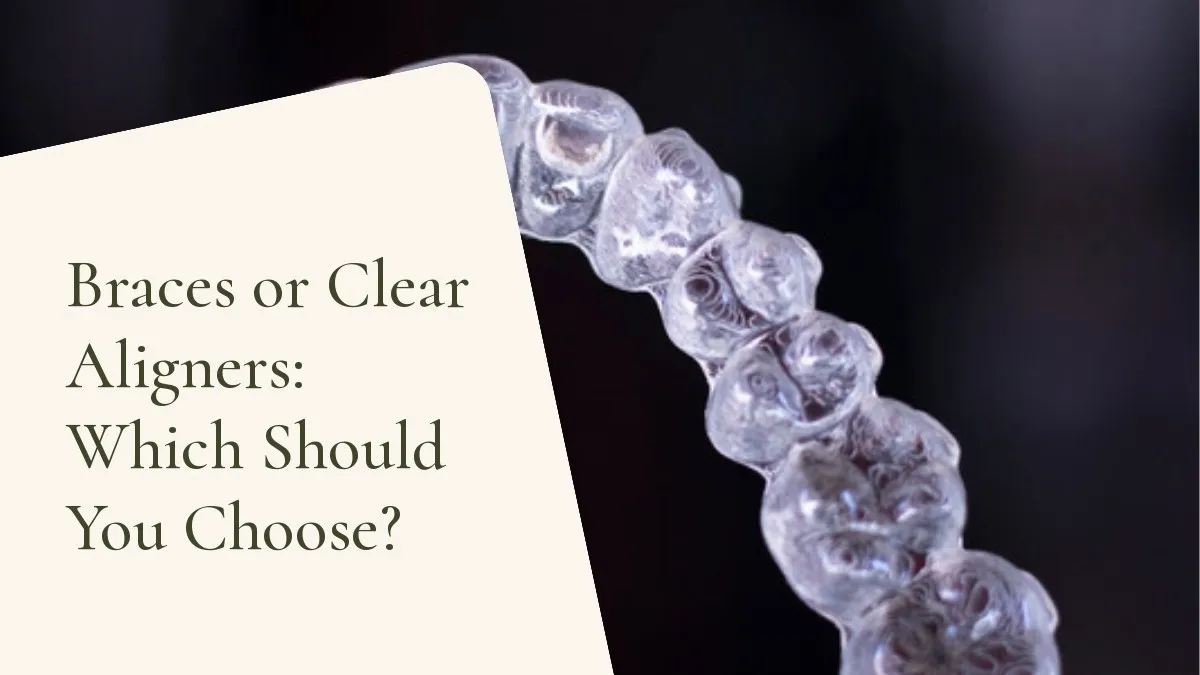
The two most common approaches are fixed braces, with brackets bonded to the teeth and wires adjusted periodically, and clear aligners, removable trays changed in sequence, such as Invisalign. Both can treat many cases of crowding. Braces are often chosen when tighter control of certain movements is needed, while aligners are discreet and make brushing and eating easier, but require discipline: the trays must be worn most of the day. The article braces vs clear aligners compares both options in detail.
To create space, the plan may include widening the arch, tipping teeth slightly forward within safe limits, a very small controlled reshaping between teeth and, in some cases, extractions. Each strategy has its indications and limits, and the choice is individual. Veneers do not replace orthodontic treatment when crowding is significant: in very mild cases they may be discussed, but they usually require removing more tooth structure than aligning the teeth first. After treatment, the retainer is what keeps the teeth in their new position.
Crooked teeth in children: when the permanent front teeth come in, around ages 6 to 8, it is common for them to be slightly rotated or spaced, and some of this settles with growth. Parents should watch whether a permanent tooth is erupting behind a baby tooth, whether there is a crossbite, whether the child breathes through the mouth or keeps sucking habits. The dentist assesses and, when needed, refers the child to an orthodontist or pediatric dentist, who manage childhood cases that need intervention. The article what age to get braces explains the stages.
This content is for information only and does not replace an exam. Consult a dentist to find out which treatment makes sense for you. In Mooca, Dr. Cléo Salustiano sees patients every day, from 8 a.m. to 10 p.m., including Sundays and holidays, offering braces and aligners and Invisalign in Mooca. While your teeth are crowded, take extra care with flossing and keep up with dental cleanings.
Can crowded teeth be fixed?
+
In the vast majority of cases, yes. Orthodontic treatment, with braces or clear aligners, can reposition the teeth and create the space needed. The approach and the timeline depend on how severe the crowding is, the bite and age, so the first step is an assessment.
Does Invisalign fix crowded teeth?
+
Aligners such as Invisalign treat many cases of crowding, from mild to moderate and, with proper planning, some more complex cases. Whether they are suitable depends on the clinical assessment and digital planning. For good results, the trays must be worn most of the day, as instructed by the dentist.
Can crowded teeth cause problems beyond appearance?
+
Yes. Overlapping areas collect plaque and are hard to clean with a brush and floss, which raises the risk of decay between teeth, gum inflammation and bad breath. In some cases, crowding also contributes to wear or uneven contacts in the bite.
Does a child's crooked tooth need braces?
+
Not always. When the permanent front teeth come in, it is common for them to be slightly rotated, and some of this settles with growth. Signs that call for an assessment are a permanent tooth erupting behind a baby tooth, a crossbite, mouth breathing or sucking habits. The dentist assesses and, when needed, refers to an orthodontist or pediatric dentist.
Why did my teeth start getting crowded as an adult?
+
Teeth move slightly throughout life, and the lower front teeth are usually the first to shift. People who wore braces and stopped wearing their retainer may also see relapse. Tooth loss, gum disease and teeth grinding can contribute. An assessment helps identify the cause and the options.
Do wisdom teeth cause crowding?
+
This is a common question. The role of wisdom teeth in crowding is debated, and they are generally not considered the main cause. Whether to remove a wisdom tooth depends on other factors, such as position, space, pain and risk of inflammation, assessed by the dentist with a clinical and X-ray exam.
Where can I have crowded teeth assessed in Mooca?
+
In Mooca, Dr. Cléo Salustiano (CRO-SP 170844) sees patients at Rua Hipódromo, 1141, near Bresser-Mooca station, Monday to Sunday, from 8 a.m. to 10 p.m., including holidays. Book a braces or Invisalign assessment via WhatsApp (11) 97409-7834, in Portuguese, English or Spanish.