 Dra. Cléo Salustiano
 In this article
SummaryWhat can clear aligners fix?Who can wear clear aligners, and who should choose braces?FAQRead nextClear Aligners: Who Can Wear Them and What They Fix
Book your braces and clear aligners assessment on WhatsAppPrefer not to wait for a reply? Book online now, no phone call needed: see the open times and pick yours, any time (booking page in Portuguese).

Quick summary of this article+
Most teenagers and adults with healthy teeth and gums can wear clear aligners, which fix crowded and rotated teeth, gaps and many bite problems using transparent trays switched in sequence and, often, resin attachments on the teeth. Very difficult movements and large mismatches between the jaws may require refinements, elastics, braces or other approaches. The deciding factor is wearing them about 22 hours a day. Braces are usually better for people who can't keep up that wear. Oral health comes first, and a retainer comes after. In Mooca, Dr. Cléo Salustiano (CRO-SP 170844) sees patients every day from 8 a.m. to 10 p.m.
Most teenagers and adults with healthy teeth and gums can wear clear aligners, which fix crooked and crowded teeth, gaps between teeth and many bite problems. They're not recommended for people who can't wear the trays about 22 hours a day, and some more complex bite or tooth-movement cases respond better to braces or a combination of both. The decision is made during an orthodontic assessment, with an exam and treatment planning.
In practice, many patients come in thinking aligners are only for "mild cases." That's no longer true for most situations, because techniques have evolved, using small tooth-colored resin bumps on the teeth, called attachments, that help the trays make more difficult movements. At the same time, there are real limits, and knowing them helps avoid frustration.
Below, Dr. Cléo Salustiano (CRO-SP 170844), a dentist in Mooca, explains what aligners fix, who can wear them, when braces are usually a better choice and what is assessed before recommending treatment.
This article comes from Dr. Cléo Salustiano's dental office in Mooca, São Paulo (care in English, Portuguese and Spanish). See the braces and clear aligners page to learn how the treatment is done here and book your assessment.
What can clear aligners fix?
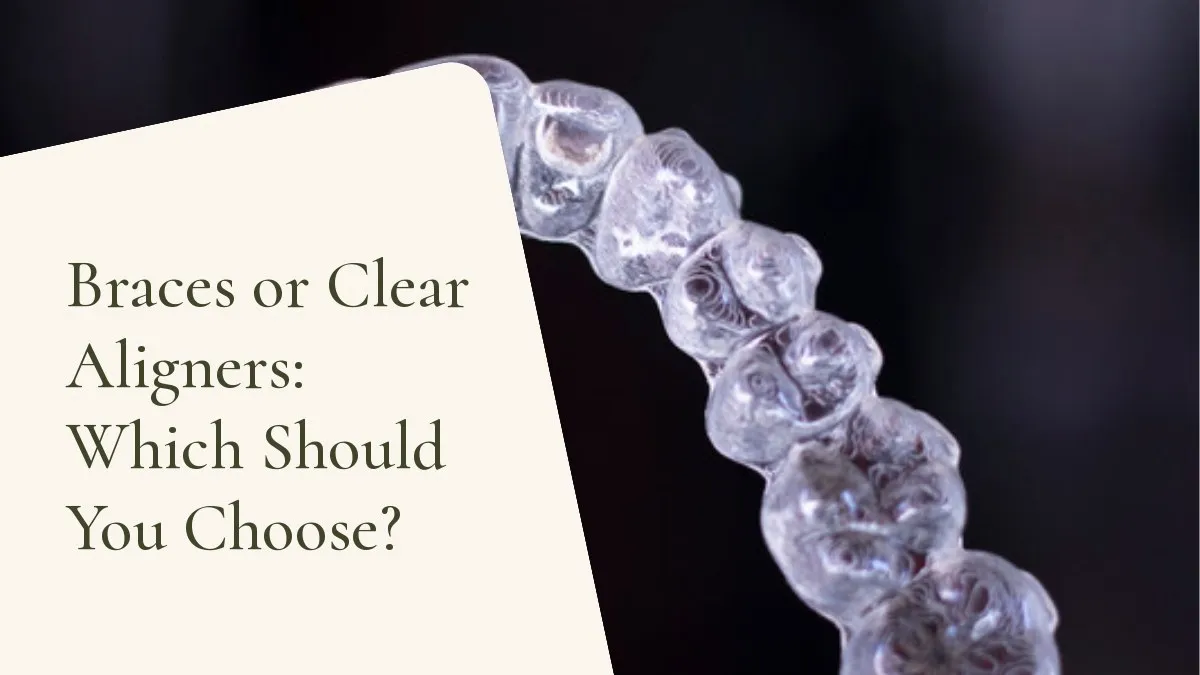
Clear aligners can fix crowded teeth, rotated or tilted teeth, gaps, protruding teeth and several bite problems, such as a mild open bite, a deep bite and some crossbites. They work with a series of custom-made transparent trays, each moving the teeth a little closer to the planned position.
Planning starts with photos, an exam, X-rays and a scan or impression of the teeth. From there, the orthodontist defines the movements and the sequence of trays. In many cases, small tooth-colored resin bumps called attachments are bonded to some teeth to give the trays something to grip, and sometimes a tiny amount of enamel is polished between teeth to create space.
Some movements are harder for aligners, such as large rotations of rounded teeth, extrusions (pulling a tooth down or up) and major bite corrections involving the relationship between the jaws. In those cases, treatment may need elastics, refinement trays at the end or a phase with fixed braces.
Cases with a large mismatch between the facial bones, such as a lower jaw that sits far forward or far back, may need other approaches, and in some adults full correction depends on jaw surgery (orthognathic surgery) combined with orthodontics. The assessment shows whether your case falls into this group or whether aligners can handle it.
The most important factor, though, isn't technical: it's wear. Aligners only move teeth while they're in your mouth, and the usual recommendation is about 22 hours a day, removing them only to eat, drink anything other than water and brush. Forgetting them or leaving them out for long periods delays treatment and may keep you from reaching the planned result.
| Situation | Clear aligners | Note |
|---|---|---|
| Mild to moderate crowding | Usually handles it well | Sometimes with minimal enamel polishing between teeth |
| Gaps between teeth | Usually handles it well | A retainer is essential afterward |
| Rotated teeth | Handles most cases | Large rotations may need refinement |
| Deep bite or mild open bite | May handle it | Depends on planning and cooperation |
| Large mismatch between the jaws | Usually not on its own | May require other approaches or surgery |
| Difficulty wearing them 22 h a day | Not a good fit | Braces tend to be more predictable |
Who can wear clear aligners, and who should choose braces?
Teenagers and adults with permanent teeth, healthy or treated gums and the willingness to wear the trays all day can use clear aligners. People who eat out a lot, speak in public for work or prefer a discreet option usually adapt well, as long as they stay disciplined about putting the trays back after every meal.
Fixed braces are usually the better choice for people who know they'll struggle with constant wear, for some complex bite cases, and for growing children, for whom other appliances may be recommended. Braces don't depend on daily cooperation to keep working, which weighs in the decision for many families and adults.
Before starting, your oral health needs to be up to date. Cavities, inflamed gums, tartar and teeth needing root canal treatment are addressed first. None of this rules out aligners: it becomes a step in the plan. People with veneers, crowns or implants can also wear them with specific planning, since implants don't move and restorations may require adjustments to the attachments.
During treatment, the care is simple but constant: brush your teeth before putting the trays back, clean the trays with a soft brush and cold water, drink only water while wearing them, switch trays on schedule and attend follow-up visits. After treatment, a retainer is essential, because teeth tend to shift back.
In Mooca, Dr. Cléo Salustiano sees patients every day from 8 a.m. to 10 p.m. and assesses whether aligners, braces or a combination of both is the most suitable path for your case. No orthodontic treatment has a guaranteed timeline or result: planning shows what is realistic to expect and how much your cooperation matters.
Who can wear clear aligners?
+
Most teenagers and adults with permanent teeth, healthy or treated gums and the willingness to wear the trays about 22 hours a day. Suitability is confirmed at an orthodontic assessment, with an exam, X-rays and planning of the tooth movements.
Do clear aligners really work?
+
They work when they're the right fit and worn properly. For most cases of crooked teeth, gaps and many bite problems, the result can be similar to braces. What most often compromises the result is wearing the trays fewer hours than recommended.
Can aligners fix my bite?
+
They fix several bite problems, such as a deep bite, a mild open bite and some crossbites, often with the help of elastics. Large mismatches between the jaws may require other approaches. The assessment shows what aligners can address in your case.
When are braces better than aligners?
+
When you know you'll have trouble wearing the trays all day, in some complex movement or bite cases, and for growing children. Braces work continuously, without depending on daily cooperation.
What are aligner attachments?
+
They're small tooth-colored resin bumps bonded to some teeth that give the trays grip for more difficult movements. They're discreet and removed at the end of treatment, and the tooth is polished.
Do my teeth need to be shaved down for aligners?
+
Sometimes a tiny amount of enamel is polished between certain teeth, called interproximal reduction, to create space without extracting teeth. It's planned, minimal and done with specific instruments. Not every case needs it.
Can I wear aligners if I have veneers or an implant?
+
Yes, with specific planning. Implants don't move and serve as a reference point; veneers and crowns may need care when bonding the attachments. In some cases, it's better to align before getting or redoing veneers.
Can I take my aligners out to eat?
+
You should. Aligners come out to eat and to drink anything other than water. Afterward, brush your teeth before putting the trays back, so food and sugar don't get trapped between the tray and the tooth.
How many hours a day do I need to wear aligners?
+
Usually about 22 hours a day, removing them only to eat, drink anything other than water and brush. Wearing them less delays treatment and can keep the next trays from fitting properly.
Do clear aligners hurt?
+
You may feel pressure or mild discomfort for the first few days of each new tray, a sign that the teeth are moving. It usually fades within a few days. Strong pain, sores or a tray that doesn't fit should be reported to your dentist.
Can children wear clear aligners?
+
There are aligners for some situations in children, but during growth other appliances are usually more suitable. For teenagers with permanent teeth, aligners are a common option. The decision depends on age, stage of tooth development and the problem to be fixed.
Do I need a retainer after aligners?
+
Yes. After any orthodontic treatment, teeth tend to shift back, and a retainer — fixed or removable — is what maintains the result. How long to wear it is set by your dentist and is usually long term.
Where can I get assessed for clear aligners in Mooca?
+
In Mooca, Dr. Cléo Salustiano (CRO-SP 170844) assesses whether clear aligners, braces or a combination of both suits your case, in Portuguese, English or Spanish. The office is at Rua Hipódromo, 1141, near Bresser-Mooca station, open Monday to Sunday, 8 a.m. to 10 p.m. Book via WhatsApp at (11) 97409-7834.