 Dra. Cléo Salustiano
In this article
SummaryWhat types of clear braces are there?Do clear braces stain? What care do they need?FAQRead nextClear Braces: What They Are, Types and How They Differ from Aligners

Quick summary of this article+
Clear braces are fixed braces with ceramic (tooth-colored) or sapphire (transparent) brackets that work like metal braces but show less. What stains most are the elastic ties, which self-ligating clear brackets do without. They need thorough hygiene, care with hard foods and attention to the bite. Clear aligners such as Invisalign are a different category: removable and nearly invisible, but dependent on disciplined wear. The choice depends on the type of correction and your routine and is defined at the assessment. In Mooca, Dr. Cléo Salustiano (CRO-SP 170844) sees patients every day, from 8 a.m. to 10 p.m.
Clear (or cosmetic) braces are fixed orthodontic braces whose brackets are transparent or tooth-colored, made of ceramic (often called porcelain) or sapphire instead of metal. They work like conventional fixed braces, with brackets bonded to the teeth and a wire that moves them, but they show much less in your smile. In everyday language, the term is also used for clear aligners such as Invisalign.
In clinical practice, the most common question is whether clear braces "work the same" as metal ones. Generally, yes: what moves teeth is the treatment plan and the wire, not the bracket color. The differences lie in details such as strength, bracket size, staining of the elastic ties and care with the bite.
Dr. Cléo Salustiano (CRO-SP 170844), a dentist in Mooca who provides braces and Invisalign, explains the types of clear braces, the care each one needs and when a clear aligner may be an alternative.
This article comes from Dr. Cléo Salustiano's dental office in Mooca, São Paulo (care in English, Portuguese and Spanish). See the braces and invisalign page to learn how the treatment is done here and book your assessment.
What types of clear braces are there?
The main types of clear braces are ceramic brackets (often called porcelain), sapphire brackets and clear self-ligating brackets. Clear aligners such as Invisalign are a different category, because they use no brackets or wire.
Ceramic bracket: tooth-colored and opaque, which helps it blend in. It is strong, though slightly larger than metal in some models. Sapphire bracket: transparent, so the tooth shows through it. In both cases, the wire may be metal or have a light-colored coating that shows less.
Clear self-ligating: the bracket has a small door that holds the wire, without elastic ties. Since the elastic ties are what stains most on conventional clear braces, this version tends to keep a more even look between appointments. The article are self-ligating braces worth it? covers the pros and cons.
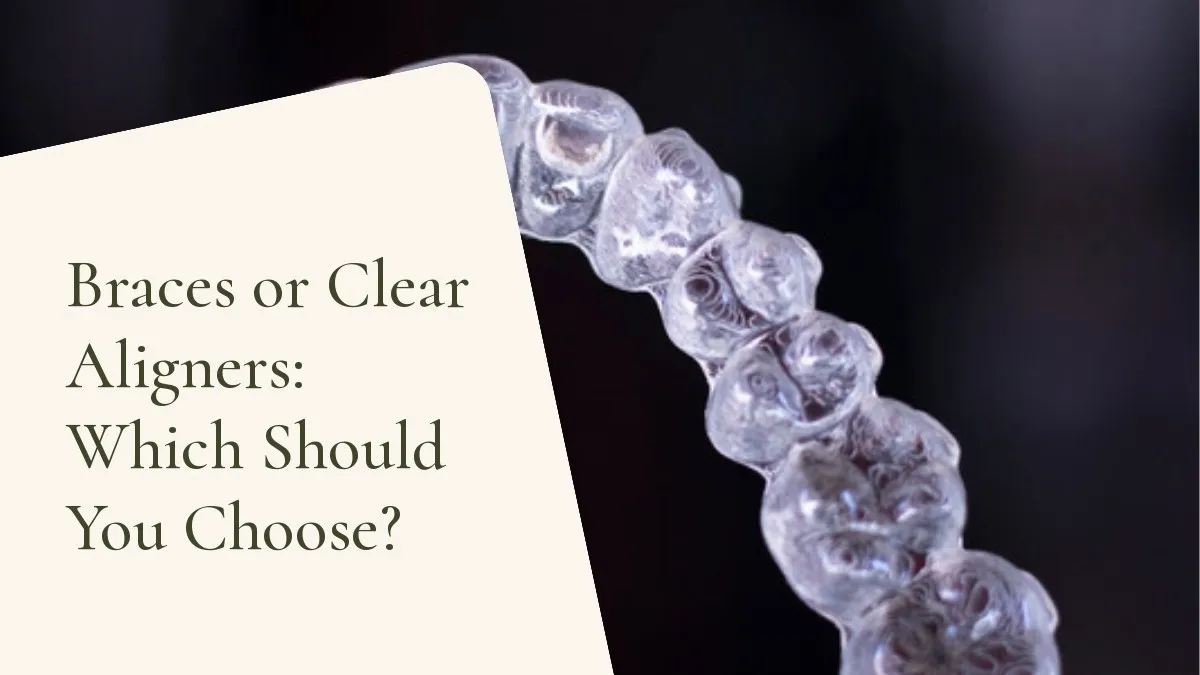
Clear aligner: a series of removable trays made from a digital plan. They are barely visible and come out for eating and brushing, but they depend on disciplined wear, usually most of the day. When people search for "invisible braces", they often mean this option; the Invisalign in Mooca page explains how it works.
| Point | Clear fixed (ceramic/sapphire) | Metal fixed | Clear aligner |
|---|---|---|---|
| Appearance | Discreet, tooth-colored or transparent | Visible | Barely noticeable |
| Removed for meals | No | No | Yes |
| What may stain | Elastic ties | Hardly relevant | Tray, if worn with dark drinks |
| Depends on wear discipline | Less | Less | More |
| Hygiene | Around brackets | Around brackets | Teeth and trays |
Do clear braces stain? What care do they need?
Ceramic or sapphire brackets themselves usually keep their color; what stains most on clear braces are the elastic ties, which pick up color from coffee, tea, wine, dark sauces and smoking. They are replaced at adjustment visits, and self-ligating brackets do without them.
Important care: thorough cleaning around each bracket with a suitable brush and floss threader, as shown in how to clean teeth with braces; avoiding biting very hard foods, which can debond or crack a bracket; and telling the dentist if a bracket comes loose. Because ceramic is hard, the orthodontist also checks whether any bracket touches the lower teeth, to avoid wear.
Which to choose: clear brackets usually suit people who want discreet fixed braces without having to remember to wear trays. Aligners tend to suit people who want to remove them for meals and events and have the discipline to wear them as instructed. Some cases are better suited to one type for the movement required, and only an assessment can tell.
Consult a dentist to find out which option suits your case: the choice considers the type of correction, the bite, your routine and hygiene. In Mooca, Dr. Cléo Salustiano sees patients every day, from 8 a.m. to 10 p.m., including Sundays and holidays, and the article braces vs clear aligners helps compare.
What are clear braces?
+
They are fixed orthodontic braces with transparent or tooth-colored brackets, made of ceramic or sapphire instead of metal. They move teeth the same way as conventional braces but show less. In everyday language, the term is also used for clear aligners.
Do clear braces work as well as metal braces?
+
Generally, yes. What moves teeth is the plan, the wire and the adjustments, not the bracket color. The differences are in details such as bracket size, strength and staining of the elastic ties. The orthodontist assesses whether a given movement is better suited to one type.
Do clear braces stain?
+
Ceramic and sapphire brackets usually keep their color; what stains most are the elastic ties, from coffee, tea, wine, dark sauces and smoking. They are replaced at adjustment visits. Clear self-ligating brackets do not use these ties.
What is the difference between sapphire and ceramic braces?
+
Sapphire brackets are transparent, so the tooth shows through. Ceramic brackets, often called porcelain, are opaque and tooth-colored. Both are discreet; the choice considers tooth color, aesthetic preference and the orthodontist's recommendation.
Clear braces or clear aligners: which should I choose?
+
Clear fixed braces are discreet and do not depend on remembering to wear trays. Aligners come out for eating and brushing but require disciplined wear most of the day. Some movements may be more predictable with one or the other. Consult a dentist to define the right path for your case.
Can adults get clear braces?
+
Yes. There is no age limit for moving teeth when teeth and gums are healthy. Many adults choose clear braces or aligners precisely for discretion. Before starting, the dentist checks gum health and treats any cavities or inflammation.
Where can I get clear braces assessed in Mooca?
+
In Mooca, Dr. Cléo Salustiano (CRO-SP 170844) assesses braces and Invisalign cases at Rua Hipódromo, 1141, near Bresser-Mooca station. The office is open Monday to Sunday, from 8 a.m. to 10 p.m., including holidays, via WhatsApp (11) 97409-7834. She sees patients in Portuguese, English and Spanish.