 Dra. Cléo Salustiano
In this article
SummaryWhat a removable appliance is and how it worksRemovable retainers and caring for a removable applianceFAQRead nextRemovable Braces: When They Are Used and What They Can Correct

Quick summary of this article+
A removable appliance is a plate you can take out, used for simple tooth movements, for the growth phase in children and teenagers and, above all, as a retainer after alignment. It does not replace fixed braces or clear aligners in cases with rotated teeth, crowding or a misaligned bite. Results depend on wearing it for the recommended time. The palatal expander, which widens the upper jaw, works best during growth. To care for the appliance, keep it in its case, clean it with cold water and go back if it hurts or feels loose. In Mooca, Dr. Cléo Salustiano (CRO-SP 170844) sees patients every day, from 8 a.m. to 10 p.m.
Removable braces are mainly used in three situations: in children and teenagers who are still growing, to guide the development of the jaws and the bite; in adults, for small, carefully selected tooth movements; and, very often, as a retainer after treatment with fixed braces or aligners. They do not replace fixed braces or clear aligners in cases that need more complex movements, such as rotating teeth, correcting root position or closing large gaps.
In clinical practice, many people ask whether they can "just use a removable appliance" to straighten their front teeth. The answer depends on the problem. A slightly tipped tooth may respond well; crowding, rotated teeth and a misaligned bite usually call for a different kind of appliance. That is why the choice comes from the exam, photos and orthodontic records, not from a preference for one model.
Dr. Cléo Salustiano (CRO-SP 170844), a dentist in Mooca, explains what a removable appliance is, what it can and cannot do, how it compares with fixed braces and aligners, and which care keeps it working.
This article comes from Dr. Cléo Salustiano's dental office in Mooca, São Paulo (care in English, Portuguese and Spanish). See the braces and invisalign page to learn how the treatment is done here and book your assessment.
What a removable appliance is and how it works
A conventional removable appliance is an acrylic plate resting on the roof of the mouth or behind the lower teeth, held by metal clasps and, depending on the goal, fitted with springs, wires or screws. Because the patient can take it out, it only applies force while it is in the mouth. That has an upside, since eating and brushing are easier, and a downside: results depend heavily on wearing it for the time the dentist recommends. An appliance left in a drawer does not move teeth.
What it usually does well: tip one or a few teeth, correct a small crossbite of a single tooth, hold space, help control habits and, in childhood, support the correction of jaw growth with orthopedic appliances. What it usually does not do well: rotate teeth, move the root together with the crown, align several crowded teeth at once or adjust the bite as a whole. In those cases, fixed braces or clear aligners offer much greater control. The article braces vs clear aligners compares those two options.
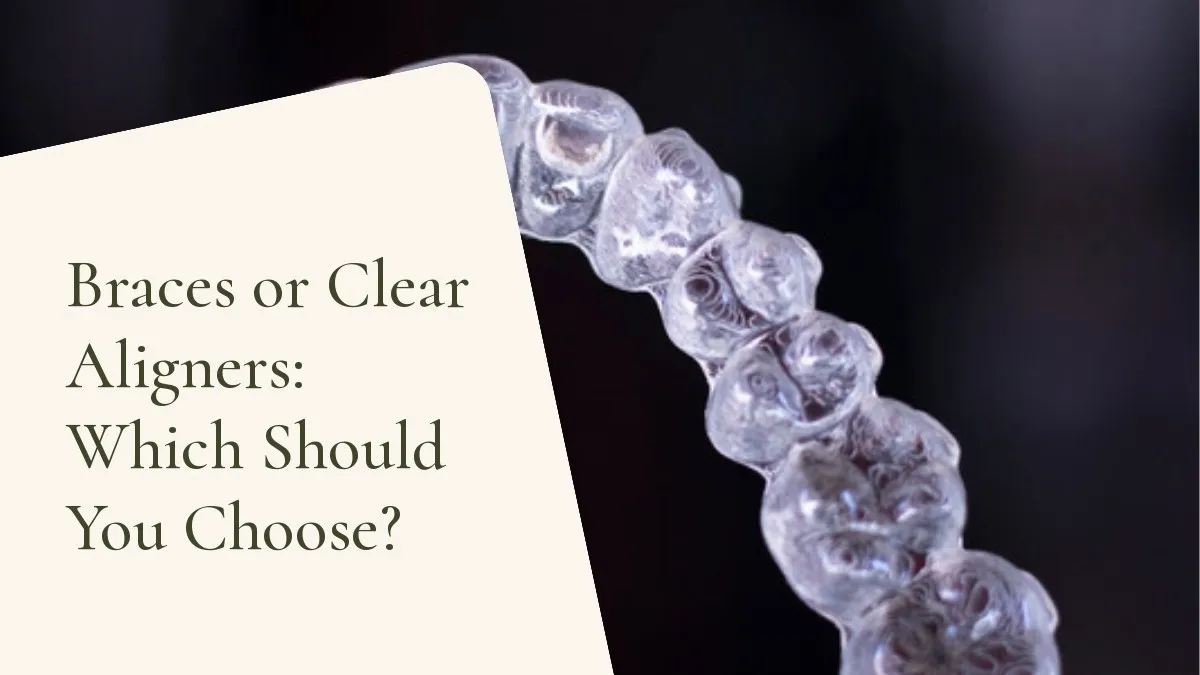
One important distinction: clear aligners are also removable, but they are not the same as a traditional removable appliance. They are a series of trays made from a digital plan, changed at set intervals, each with a small programmed movement. That is why they can treat much more complex cases in adults and teenagers, as long as they are worn for the recommended hours. To see whether your case fits, read who can use clear aligners.
In children, removable appliances and the palatal expander (which widens a narrow upper arch, often with a crossbite) take advantage of the growth phase. Expanders can be fixed or removable, and the right time to use one depends on age and an orthodontic assessment. Once growth is complete, widening the upper jaw becomes harder and may require other approaches. The article on the best age for braces helps you understand when to have a child assessed; at the office, the dentist advises and, when needed, refers to a pediatric dentist or the appropriate orthodontic assessment.
| Type | Usually indicated for | Limitations |
|---|---|---|
| Removable appliance | Simple movements, growth phase, space maintenance and retention | Little control of roots and rotation; depends on wear time |
| Fixed braces | Simple to complex cases, at any age with healthy teeth and gums | Needs more care with hygiene; more visible |
| Clear aligners | Many cases in teenagers and adults, with digital planning | Must be worn for the recommended hours |
| Palatal expander | Narrow upper arch and crossbite, during growth | After growth, other approaches are needed |
| Removable retainer | After alignment, to keep teeth in place | Needs ongoing wear as instructed |
Removable retainers and caring for a removable appliance
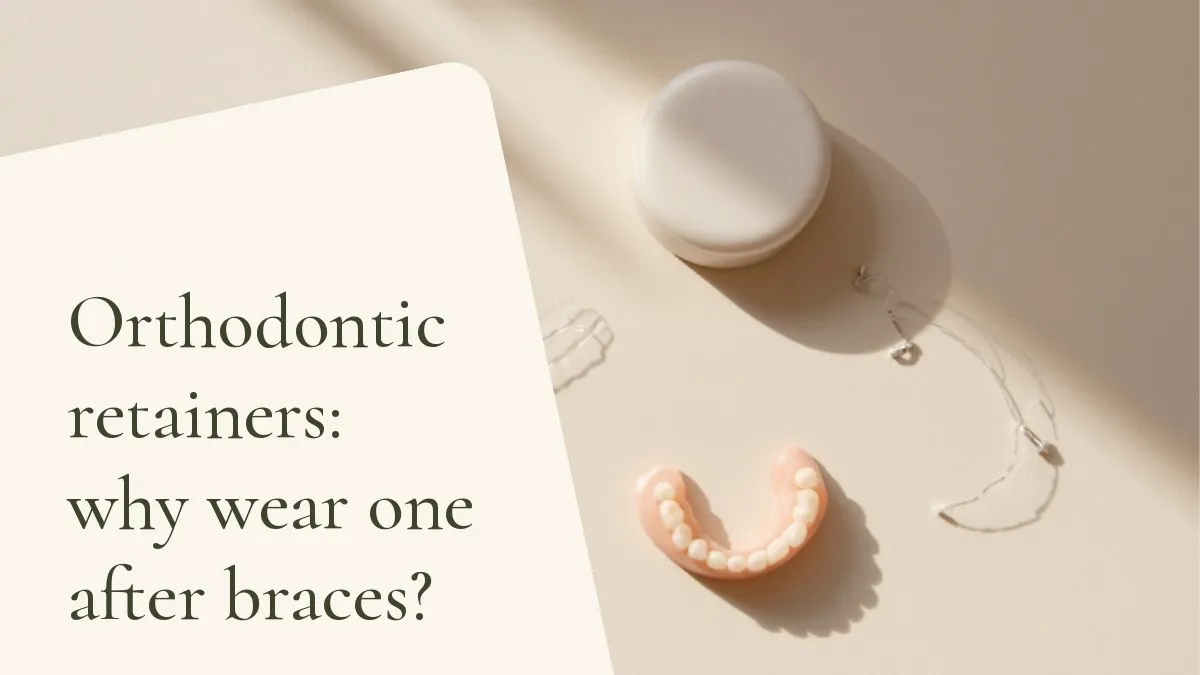
Today, the most common use of removable appliances in adults and teenagers is retention. Once teeth are aligned, they tend to drift back, and the retainer holds the result. It can be an acrylic plate with a wire across the front, a clear tray similar to an aligner or a wire bonded behind the teeth (fixed retainer), often combined with a night-time tray. How long and how often to wear it is set by the dentist and usually extends for a long time, especially at night. The article on retainers after braces describes the types.
To keep a removable appliance working: take it out to eat and always store it in its case, never wrapped in a napkin, which is the most common way to lose it; brush your teeth before putting it back; clean the plate every day with a soft brush and cold water or mild soap, never hot water, which can warp the acrylic, and no abrasive toothpaste, which scratches it; keep it away from pets. In the first days, it is common to feel pressure, speak slightly differently and produce more saliva; this tends to pass as you adapt.
Go back to the dentist if the appliance hurts your gum or cheek, feels loose or too tight, if a clasp or spring breaks, or if it no longer fits after a few days without wearing it. Do not bend clasps or sand the acrylic at home, as that changes the force on the teeth. A broken or poorly fitting appliance can hinder treatment instead of helping it.
This content is for information only and does not replace an assessment. Consult a dentist to find out which type of appliance makes sense for your case. In Mooca, Dr. Cléo Salustiano sees patients every day, from 8 a.m. to 10 p.m., including Sundays and holidays, with assessments for braces and aligners, including retention planning.
Do removable braces work?
+
They work for what they are designed to do: simple movements of a few teeth, guiding growth in children and retention after treatment. For rotated teeth, crowding or bite correction, fixed braces or aligners are usually more suitable. And they only act while they are in your mouth.
Can adults use removable braces?
+
Yes, in well-selected cases, such as slightly tipping one tooth or as a retainer. For more complete alignment, adults usually get better results with fixed braces or clear aligners, which control movement more precisely. The choice depends on the assessment.
What is the difference between a removable appliance and clear aligners?
+
Both are removable, but they work differently. A removable appliance is an acrylic plate with clasps and springs, worn for long periods. Aligners are a series of clear trays planned digitally and changed at set intervals, and they can treat more complex cases.
How many hours a day should I wear a removable appliance?
+
It depends on the goal and the type of appliance, and the dentist decides. Active appliances usually need to be worn most of the day; retainers are often worn mainly at night after a while. Wearing it less than instructed delays or compromises the result.
What is a palatal expander?
+
It is an appliance that widens the upper arch when it is narrow, often with a crossbite. It is most effective during growth, in childhood and early adolescence. Whether it is needed and when is decided in an orthodontic assessment.
How do I clean a removable appliance?
+
Brush the plate every day with a soft brush and cold water or mild soap, without abrasive toothpaste and without hot water, which can warp the acrylic. Brush your teeth before putting it back and always keep it in its case when you are not wearing it.
Where can I have braces assessed in Mooca?
+
In Mooca, Dr. Cléo Salustiano (CRO-SP 170844) sees patients at Rua Hipódromo, 1141, near Bresser-Mooca station, Monday to Sunday, from 8 a.m. to 10 p.m., including holidays. Appointments via WhatsApp (11) 97409-7834, in Portuguese, English or Spanish.