 Dra. Cléo Salustiano
 In this article
SummaryWhat is a retainer, and why is it necessary?How long to wear it, and what happens if you stop?FAQRead nextOrthodontic retainers: why wear one after braces?
Book your braces and clear aligners assessment on WhatsAppPrefer not to wait for a reply? Book online now, no phone call needed: see the open times and pick yours, any time (booking page in Portuguese).
Quick summary of this article+
The orthodontic retainer is the final phase of treatment: it keeps teeth in their new position, because they tend to return to where they were (relapse). There are fixed retainers (a wire bonded behind the teeth) and removable ones (a tray), often combined. Wear time is usually long, sometimes indefinite with reduced use. Abandoning it is the main reason teeth get crooked again. In Mooca, Dr. Cléo Salustiano (CRO-SP 170844) sees patients every day, 8 a.m. to 10 p.m.
The orthodontic retainer is the final — and often forgotten — phase of treatment with braces. Once teeth are aligned, they tend to try to move back to their old position; the retainer is what holds on to the result you worked for. Skipping or abandoning this step is the main reason teeth get "crooked" again.
In clinical practice, it's common for patients to celebrate getting their braces off and relax about the retainer — and, months or years later, notice their teeth moving. Understanding that the retainer is part of treatment, not an "optional extra," avoids that frustration.
In this article, Dr. Cléo Salustiano (CRO-SP 170844) explains what a retainer is, why it's necessary, the types, how long to wear it and what happens if you stop. Since every case is unique, your orthodontist's guidance is what sets your protocol.
This article comes from Dr. Cléo Salustiano's dental office in Mooca, São Paulo (care in English, Portuguese and Spanish). See the braces and clear aligners page to learn how the treatment is done here and book your assessment.
What is a retainer, and why is it necessary?
A retainer is a device used after the active phase of braces to keep teeth in their new position. It doesn't move teeth — it just holds them in place while the bone and surrounding tissues reorganize and stabilize in the new configuration.
It's necessary because teeth have a natural tendency to return to their original position (known as relapse), especially in the first months after treatment. The bone and ligament are still settling, and without a retainer, this movement back is common.
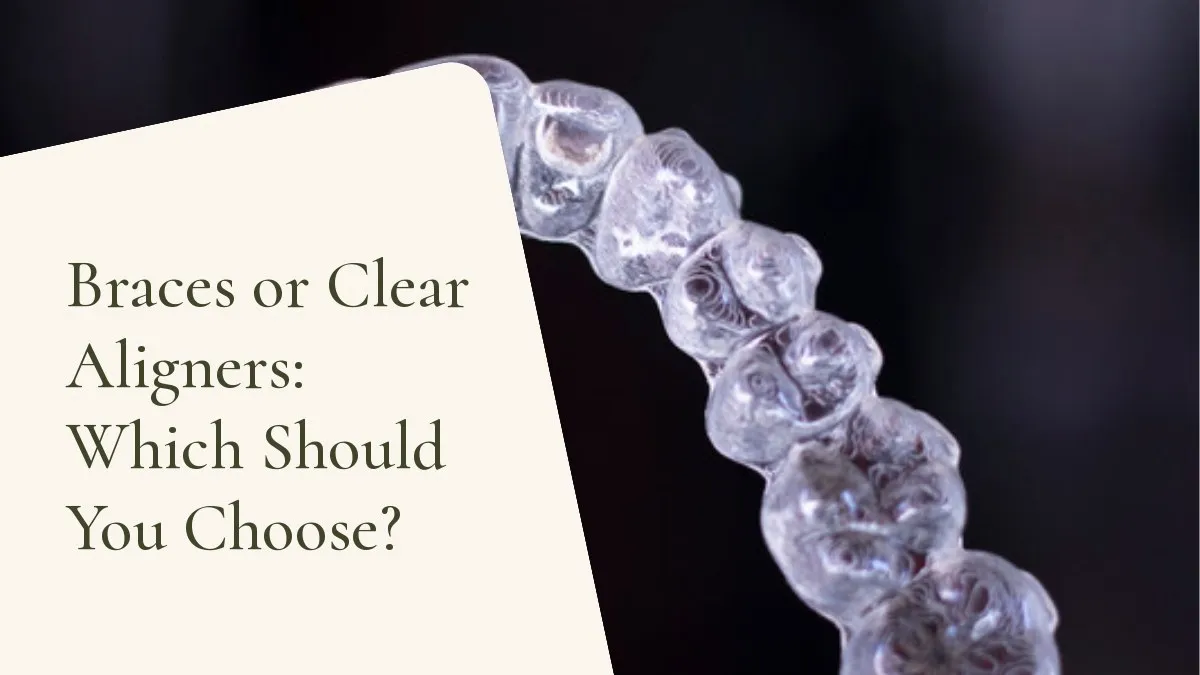
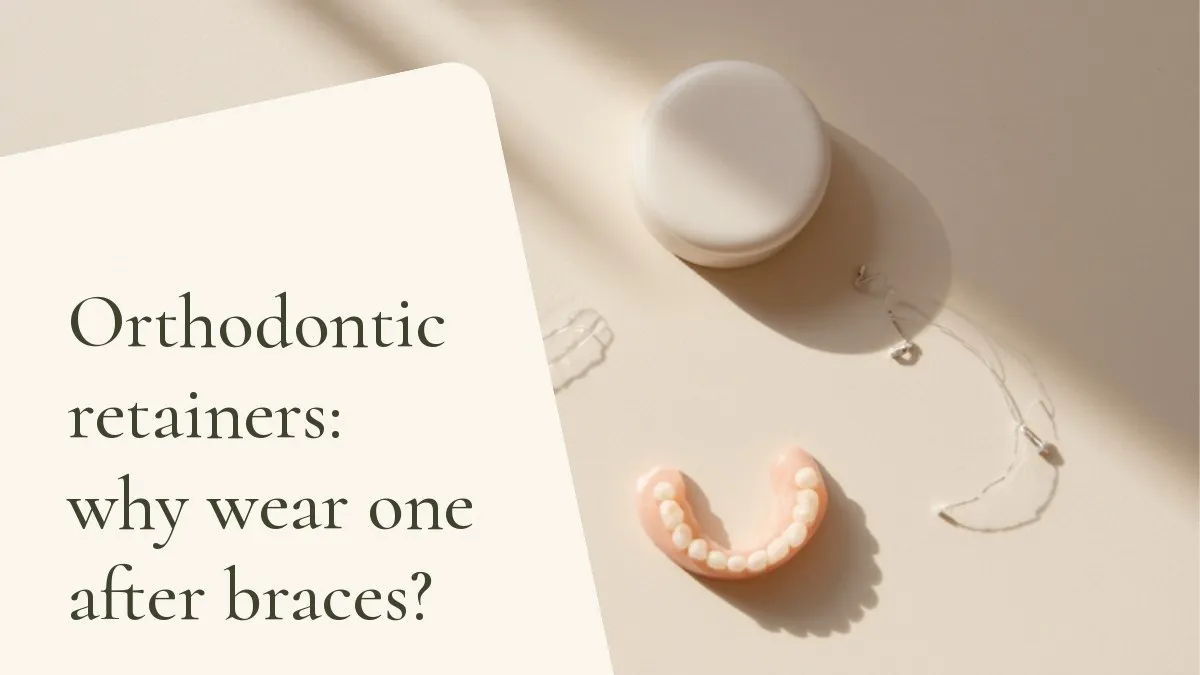
There are two main types. A fixed retainer is a thin wire bonded behind the teeth (usually the front ones), discreet and permanent, and it doesn't show when you smile. A removable retainer is a clear tray (similar to an aligner) that you put in and take out, as instructed.
The two are often combined — a fixed retainer behind the front teeth and a removable one worn at night, for example. The choice depends on the case, the type of tooth movement done and your profile. Your orthodontist decides what best protects your result.
Retainers need their own care: a fixed retainer calls for careful hygiene (floss with a floss threader in that area); a removable one needs to be worn for the recommended time and kept clean. Neglecting this care can compromise both the retainer and your oral health.
In short, the retainer is what turns a good result into a lasting one. It's as much a part of treatment as the braces themselves — and deserves the same attention, because it protects all the time and investment you put in.
| Aspect | Fixed retainer | Removable retainer |
|---|---|---|
| What it is | A thin wire bonded behind the teeth, usually the front ones | A clear tray, similar to an aligner |
| Shows when you smile | No | Only while you're wearing it |
| Depends on discipline | No | Yes — it needs to be worn as instructed |
| Combined use | The two are often used together | The two are often used together |
| What it's for | Keeping teeth in their new position — it doesn't move teeth | Keeping teeth in their new position |
| How long | Long term, often years and sometimes indefinitely | More intensive wear in the first months, then reduced (for example, only at night) |
| If you stop too soon | Teeth can move and the result can be lost, sometimes requiring new treatment | The same |
How long to wear it, and what happens if you stop?
How long to wear a retainer varies by case, but it's usually a long time — often years, and in some cases indefinitely, with reduced wear (for example, only at night). The tendency to relapse never fully goes away, so the retainer is a long-term ally.
In the first months after braces, wear is usually more intensive, because that's when the risk of teeth shifting back is highest. Over time, the protocol may be reduced, always following the guidance of the professional monitoring the stability of your result.
If you stop wearing the retainer too soon, teeth can move and the result can be lost, sometimes requiring new orthodontic treatment. It's frustrating to lose months of braces by giving up on the retainer — which is why this phase deserves discipline.
Keep up with checkups. At these visits, the dentist checks whether the fixed retainer is still well bonded and intact, and whether the removable one still fits well. A fixed retainer that comes loose without you noticing stops protecting — which is why follow-up matters.
Take care of your hygiene, especially with a fixed retainer: the wire behind your teeth collects plaque and tartar if it isn't cleaned well, which can affect your gums. Use floss with a floss threader and be thorough in that area. A removable retainer should be cleaned as instructed.
Finally, think of the retainer as part of ongoing care for your smile. It's simple, discreet and makes a huge difference. If you have any concern — a loose wire, a tray that no longer fits, a lost retainer — contact your dentist right away.
What is an orthodontic retainer?
+
It's a device used after the active phase of braces to keep teeth in their new position. It doesn't move teeth — it just holds them while the bone and tissues stabilize. It's the step that makes the treatment result last.
Why do I need a retainer after braces?
+
Because teeth tend to return to their old position (relapse), especially in the first months, while the bone is still settling. The retainer holds the result. Without it, it's common for teeth to shift and alignment to be lost.
What types of retainers are there?
+
Fixed, a thin wire bonded behind the teeth (discreet, it doesn't show when you smile), and removable, a clear tray you put in and take out. They're often combined. Your orthodontist chooses the type that best protects your result.
How long should I wear my retainer?
+
It varies by case, but usually for a long time — often years, sometimes indefinitely with reduced wear (for example, only at night). The tendency to relapse never fully goes away, so the retainer is a long-term ally.
What happens if I stop wearing my retainer?
+
Teeth can move and the result can be lost, sometimes requiring new treatment. Abandoning the retainer is the main reason teeth get crooked again. It's frustrating to lose months of braces that way — which is why this phase calls for discipline.
Does a fixed retainer show when I smile?
+
No. It's a thin wire bonded behind the front teeth, so it's invisible when you smile. It's discreet and comfortable once you get used to it. The main care is thorough hygiene in that area, with floss and a floss threader.
How do I clean a fixed retainer?
+
With extra attention: the wire collects plaque and tartar if it isn't cleaned well. Use floss with a floss threader to clean between the teeth and around the wire, and brush thoroughly. Good hygiene protects your gums and the retainer itself.
Does a removable retainer need to be worn every day?
+
In the first months, wear is usually more intensive; later, it may be reduced (often to nighttime only), as instructed. It only protects if worn for the recommended time — forgetting it often lets teeth move.
Fixed or removable retainer: which is better?
+
It depends on the case and the type of tooth movement done. A fixed retainer is practical (you don't have to remember it) and discreet; a removable one is easy to clean and adjust. The two are often combined. Your orthodontist decides what best protects your result.
Does a retainer move teeth?
+
No. Unlike braces, a retainer doesn't move teeth — it holds them. If teeth have already shifted from not wearing a retainer, new active treatment may be needed to realign them, followed by starting the retainer again. That's why it's best not to stop.
Can the retainer wire come loose?
+
It can partially debond, sometimes without you noticing. A loose fixed retainer stops protecting and can even hurt. That's why checkups matter: the dentist checks that it's intact. If you notice the wire is loose, see your orthodontist.
I lost my removable retainer. Now what?
+
Contact your dentist as soon as possible to have a new one made, so you don't go too long without a retainer. The longer you go without it, the greater the risk of teeth starting to move. Don't put it off — replacing it protects your result.
Do people who never had braces need a retainer?
+
Retainers are specifically for maintaining the result of orthodontic treatment. People who never had braces don't wear a retainer, but they may notice natural tooth movement over their lifetime. In those cases, an assessment will guide what to do.
Is a retainer uncomfortable, or does it affect speech?
+
There may be a brief adjustment period, especially with a removable retainer, but the discomfort usually passes quickly. Once you're used to it, a fixed retainer is barely noticeable. If something hurts or doesn't fit well, let your dentist know so it can be adjusted.
Where can I get a retainer and follow-up in Mooca?
+
Dr. Cléo Salustiano (CRO-SP 170844) sees patients at Rua Hipódromo, 1141, in Mooca, São Paulo, Monday to Sunday, 8 a.m. to 10 p.m., in Portuguese, English and Spanish. The assessment determines the type of retainer and the wear protocol to maintain your result.