 Dra. Cléo Salustiano
In this article
SummaryStep by stepInvisalign and braces: technical facts for talking to your dentistEast Zone and São Paulo: how to compare, and the office as one of the optionsFAQRead nextBest Invisalign and braces dentists in Mooca, East Zone and São Paulo: a guide to choosing

Quick summary of this article+
To choose an Invisalign and braces dentist in Mooca, the East Zone or São Paulo, check registration and specialty with the CRO, use Invisalign's official locator, require digital planning with a simulation, compare aligners and fixed braces with an honest recommendation and arrange follow-up and retention. Aligners are usually worn 20 to 22 hours a day, and duration ranges from a few months to more than two years. Dr. Cléo Salustiano's office (CRO-SP 170844) works with Invisalign and fixed braces and is one option in Mooca, every day 8 a.m. to 10 p.m. This guide is not a ranking and gives no prices.
Short answer: to choose a dentist for Invisalign and braces in Mooca, the East Zone or São Paulo, check registration and specialty with the CRO, ask whether the professional appears in Invisalign's official provider locator, require planning with scanning and a digital simulation, compare aligners with fixed braces and arrange follow-up and retention. Dr. Cléo Salustiano's office (CRO-SP 170844), which works with Invisalign and fixed braces, is one option in Mooca: Rua Hipódromo, 1141, every day from 8 a.m. to 10 p.m.
Invisalign is a brand of clear aligners, and the result depends less on the brand and more on diagnosis, planning and the professional's follow-up. So the useful question is not "who is the best dentist" but "who has the training, experience and setup for my case". This guide gathers the criteria, the technical facts for talking to a professional and how to compare options in Mooca, the East Zone and the city of São Paulo in one text.
This guide is informational, follows Brazilian dental council (CFO/CRO) rules and is not a ranking: the order of the criteria does not indicate quality, and Dr. Cléo Salustiano's office (CRO-SP 170844) is mentioned only as one of the options, with verifiable data. There is no promise of results, and fees are only given in an individual quote after the assessment.
Unsure between treatment options? See Invisalign vs other clear aligner brands and braces vs clear aligners.
This article comes from Dr. Cléo Salustiano's dental office in Mooca, São Paulo (care in English, Portuguese and Spanish). See the braces and invisalign page to learn how the treatment is done here and book your assessment.
Step by step
- Confirm registration and specialty. Check the active CRO-SP registration. Orthodontics is a recognized specialty, and the title may only be used if registered with the council. Dentists with other training may also work with aligners within their competence. What matters is knowing who is responsible for the planning.
- Check Invisalign's official locator. Invisalign's website has a locator of dentists who work with the system. Ask the professional and check it there. Being listed shows that the dentist uses the platform but does not measure experience: also ask for how long and in how many cases they have worked with aligners.
- Ask for digital planning and a simulation. Treatment starts with photos, X-rays, a bite assessment and a digital scan or impression. The professional then presents the simulation of tooth movement. Ask which movements are planned, what aligners do not do well and whether interproximal reduction or attachments are needed.
- Require an honest recommendation between aligners and braces. Aligners solve many cases well, but some movements and complex bites may be better treated with fixed braces or a combination. Be wary of anyone who recommends the same thing for everyone without assessing your case.
- Treat cavities and gums before aligning. Cavities and gum inflammation need to be resolved before braces. Oral health conditions the treatment, and the professional should assess this at the first visit.
- Arrange follow-up and retention. Ask how often the visits are, what happens if the plan needs adjusting (refinement) and how retention will work after treatment. Without retention, teeth tend to drift back.
Invisalign and braces: technical facts for talking to your dentist
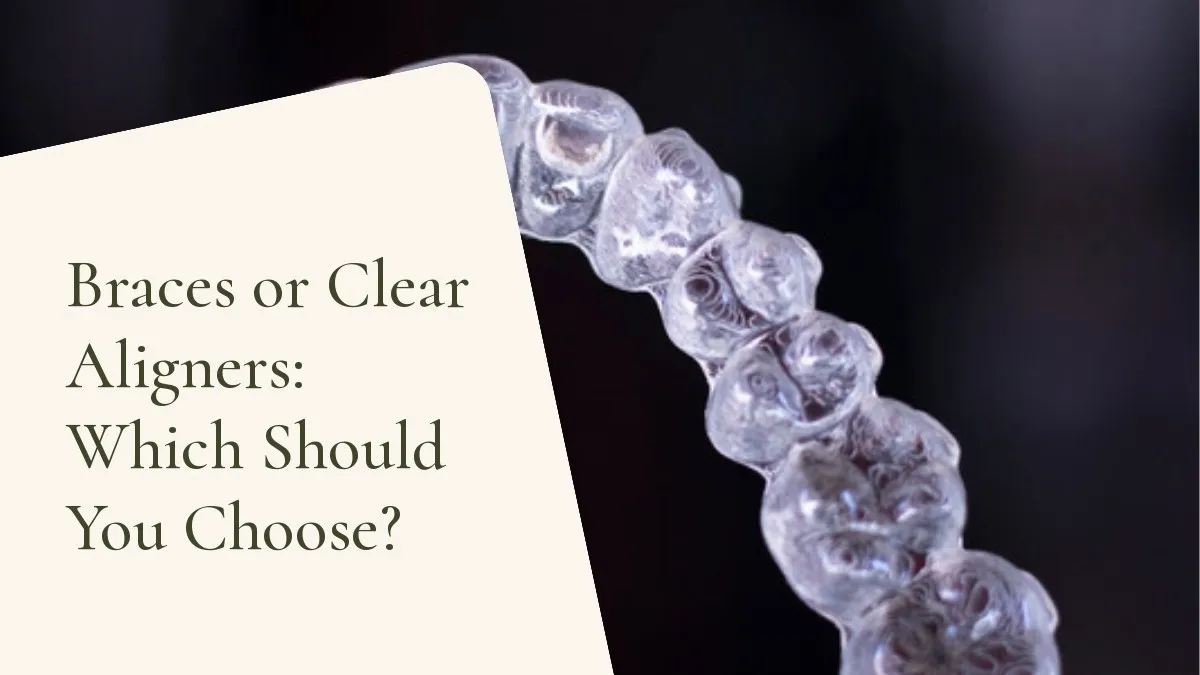
How aligners work. It is a sequence of clear trays made from a digital scan. Each tray moves the teeth a small fraction; trays are usually changed every one or two weeks, according to the plan. Small tooth-colored resin bumps (attachments) help the aligner push certain teeth. The standard guidance is to wear them 20 to 22 hours a day, removing them only to eat, drink anything other than water and brush.
Who can use them. Adults and teenagers with healthy teeth and gums, in cases of mild to moderate crowding, small gaps, rotated or tilted teeth and some bite changes. More complex cases may call for something else. See who can use clear aligners and are clear aligners worth it for adults?.
Aligners or fixed braces? Fixed braces remain an effective option, including for complex cases, with periodic adjustments by the professional. Aligners offer discretion and easier hygiene, but depend on the patient's daily discipline. Details in braces vs clear aligners.
How long it lasts. Duration depends on complexity and on the patient's cooperation. It can range from a few months to more than two years, and no professional should promise an exact timeline before planning. More in how long do braces take.
Retention is part of treatment. After aligning, teeth must be held in the new position with retainers, fixed or removable. See retainers after braces. To understand what makes up the investment, with no prices, read Invisalign cost.
| Where you are | How to get to Rua Hipódromo, 1141 | Note |
|---|---|---|
| Mooca, Alto da Mooca and Brás | On foot, by bus or by subway to Bresser-Mooca (Line 3-Red) | About a 6-minute walk from the station; parking is available in the area |
| Belém, Tatuapé, Carrão, Penha and Vila Matilde | Line 3-Red to Bresser-Mooca, no transfer | Good for people who need evening or weekend hours |
| Anália Franco, Vila Prudente, Água Rasa and other East Zone neighborhoods | Bus, car or ride-hailing; or subway connecting to Line 3-Red | Check the route in a maps app before leaving |
| Other regions of the city of São Paulo | Line 3-Red (east–west) with connections to other lines | Worth it when the treatment needs few visits or when hours until 10 p.m. help |
East Zone and São Paulo: how to compare, and the office as one of the options
East Zone. For people who live or work in Tatuapé, Belém, Brás, Carrão, Penha or Vila Matilde, Subway Line 3-Red links those neighborhoods to Bresser-Mooca station without changing trains, and the office is about a 6-minute walk from it. See the route in dentist near Tatuapé, dentist near Bresser-Mooca station and dentist in the East Zone. When comparing East Zone professionals, distance matters less for planning visits and more for emergencies and frequent follow-ups, which is what should guide the choice.
The city of São Paulo. In searches for "best dentist in São Paulo", the first results tend to be directories and platform lists that mix professionals from across the city. For a short, reliable list, combine three verifiable sources: the public registry lookup at the dental council (CRO-SP) to confirm registration and registered specialties, the public Google reviews (volume, dates and content of the accounts) and the professional's own website. Subway Line 3-Red crosses the city from east to west and connects to other lines, which makes it easier to reach Mooca from other regions for treatments that need few visits.
One option in Mooca: Dr. Cléo Salustiano's office. Address: Rua Hipódromo, 1141, Mooca, São Paulo (postal code 03164-140). Hours: every day from 8 a.m. to 10 p.m., including Sundays and holidays, by appointment. Access: about a 6-minute walk from the Bresser-Mooca subway station (Line 3-Red). Private care, in Portuguese, English and Spanish. Reviews: 5.0 rating on Google with more than 150 public reviews (numbers change; check the Google profile and patient reviews).
How the office works with orthodontics. Dr. Cléo is a dentist (CRO-SP 170844), with a dental degree from UNICID and a postgraduate course in Prosthodontics and Restorative Dentistry at São Leopoldo Mandic, and does not present herself as an orthodontist. She works with Invisalign and fixed braces, and the choice between them is set at an individual assessment. To check provider listing, use Invisalign's official locator and ask at the visit. See the page on Invisalign and braces in Mooca and the article Invisalign in Mooca.
Warning signs when choosing. Be wary of anyone who promises a timeline and result before planning, recommends aligners for every case, does not mention retention, does not assess cavities and gums or uses price as the only argument. Fees depend on complexity and duration and are only given after the assessment. This guide gives no prices.
How do I choose a good Invisalign dentist?
+
Check registration and specialty with the CRO, use Invisalign's official locator, require planning with scanning and a simulation, compare aligners and fixed braces with an honest recommendation and arrange follow-up and retention.
How can I tell whether a dentist is an Invisalign provider?
+
Ask the professional and check the official dentist locator on Invisalign's website. Being listed shows the dentist uses the platform but does not replace asking about training and experience.
Do I need an orthodontist to use Invisalign?
+
Orthodontics is a specialty, and the title may only be used if registered. Dentists with other training may also work with aligners within their competence. What matters is knowing who is responsible for the planning.
Invisalign or another aligner brand: what is the difference?
+
Both follow the same principle of clear trays made from a digital scan. The recommendation depends on what each system offers for your case and on the professional's planning, not only the brand.
How long does aligner treatment last?
+
It depends on complexity and daily wear. It can range from a few months to more than two years, and the timeline is estimated after planning.
Can adults use clear aligners?
+
Yes. There is no age limit for orthodontics; what matters is the health of teeth and gums. The assessment defines the best approach for your case.
How much does Invisalign cost?
+
The fee depends on complexity, duration and what is included (refinements and retainers, for example), and is only given after the assessment. This guide gives no prices.
Can I whiten or get veneers during treatment?
+
Generally, you align first and esthetic treatment comes afterward, with the teeth in their final position. The plan defines the best sequence for your case.
Where can I get Invisalign or braces in São Paulo's East Zone?
+
There are professionals and clinics in several East Zone neighborhoods. Compare professional registration, experience with the procedure, public reviews and follow-up after treatment. Dr. Cléo Salustiano's office is in Mooca, in the East Zone, about a 6-minute walk from the Bresser-Mooca subway station.
Is there a dentist for Invisalign and braces open on Sundays or in the evening?
+
Dr. Cléo Salustiano's office is open every day from 8 a.m. to 10 p.m., including Sundays and holidays, by appointment through WhatsApp (11) 97409-7834. Other offices may keep different hours, so confirm before you go.
Does the office accept dental insurance, and is care available in other languages?
+
Care is private, with no insurance or dental plans. Appointments can be held in Portuguese, English or Spanish.