 Dra. Cléo Salustiano
 In this article
SummaryHow Invisalign treatment worksCaring for Invisalign and booking your assessment in MoocaFAQRead nextInvisalign in Mooca: How Clear Aligner Treatment Works
Book your braces and clear aligners assessment on WhatsAppPrefer not to wait for a reply? Book online now, no phone call needed: see the open times and pick yours, any time (booking page in Portuguese).
Quick summary of this article+
Dr. Cléo Salustiano (CRO-SP 170844) works with Invisalign in Mooca. The system uses a sequence of clear aligners, custom-made from a digital scan and switched every one to two weeks, which need to be worn 20 to 22 hours a day to work as planned. It's chosen by people who want discretion and no food restrictions, but it depends on wear discipline. Not every case can be solved with aligners — suitability depends on an individual assessment. In Mooca, the office is open Monday to Sunday, 8 a.m. to 10 p.m.
Dr. Cléo Salustiano (CRO-SP 170844) works with Invisalign in Mooca, São Paulo, and sees patients in Portuguese, English and Spanish. This article explains what the system is, how treatment works and what to expect — for those who have already decided on clear aligners and want to understand Invisalign specifically, not aligners in general.
If you're still deciding between fixed braces and aligners, or between Invisalign and other clear aligner brands, it's worth reading braces or clear aligners: which should you choose? first, which compares the options in detail.
As with any orthodontic treatment, whether Invisalign is right for you depends on an individual assessment — there's no promise of results or a fixed timeline, and each plan is designed around your case.
This article comes from Dr. Cléo Salustiano's dental office in Mooca, São Paulo (care in English, Portuguese and Spanish). See the braces and clear aligners page to learn how the treatment is done here and book your assessment.
How Invisalign treatment works
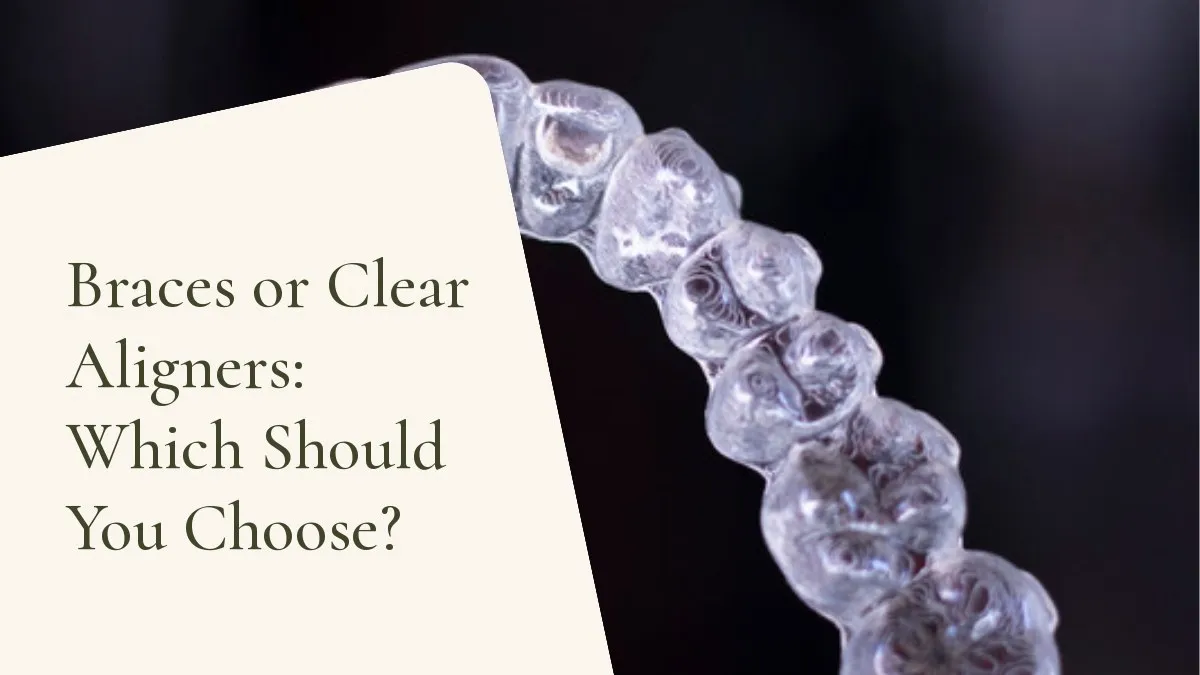
Invisalign is a system of removable clear aligners, custom-made from a digital scan of your mouth. From that scan, a digital plan is created that simulates, step by step, the planned movement of your teeth to their final position.
Treatment is divided into a sequence of trays (aligners), each worn for about one to two weeks before switching to the next. Each aligner applies a light, controlled force that gradually guides the teeth according to the plan.
To work as planned, the aligner needs to be worn many hours a day — usually 20 to 22 hours — and taken out only to eat, drink (except water) and clean your teeth. This wear discipline is what determines whether treatment progresses at the expected pace.
Because it's clear and removable, Invisalign is often chosen by people who want discretion day to day and don't want to give up eating freely or brushing and flossing as usual. On the other hand, unlike fixed braces, it depends on proper wear to work.
Not every case can be solved with aligners — the complexity of the needed correction is what decides that. That's why the orthodontic assessment, with imaging and a digital scan, always comes before any decision about treatment.
| Item | What it's like |
|---|---|
| How the trays are made | Custom-made from a digital scan of your mouth |
| Planning | Digital, simulating step by step the planned movement to the final position |
| Switching aligners | About one to two weeks per tray |
| Hours of wear per day | Usually 20 to 22 hours |
| When to take it out | To eat, drink (except water) and clean your teeth |
| Tooth hygiene | Simpler than with fixed braces: the aligner comes out for brushing and flossing |
| Aligner hygiene | Rinse and brush gently before putting it back in |
| After eating | Brush your teeth before putting it back in, so debris isn't trapped against the enamel |
| At the end | A retainer phase, as with fixed braces |
Caring for Invisalign and booking your assessment in Mooca
The main requirement is wear discipline: keeping the aligner in for the recommended hours each day and switching trays at the pace set by the plan. Wearing it fewer hours than recommended delays treatment and can compromise the planned outcome.
Hygiene is simpler than with fixed braces, since the aligner comes out so you can brush and floss normally. It's also important to clean the aligner itself — rinsing it and brushing it gently — before putting it back in.
Food and drinks (except water) should be consumed with the aligner out, so the trays don't stain or get damaged. After eating, it's best to brush your teeth before putting the aligner back in, to avoid trapping debris against the enamel.
As with fixed braces, Invisalign usually calls for a retainer phase at the end of treatment, to keep the teeth in the position achieved.
Dr. Cléo Salustiano (CRO-SP 170844) sees patients at Rua Hipódromo, 1141, in Mooca, São Paulo, Monday to Sunday, from 8 a.m. to 10 p.m. An assessment with a digital scan is the starting point for finding out whether Invisalign is right for your case.
Does Dr. Cléo work with Invisalign?
+
Yes, Dr. Cléo Salustiano (CRO-SP 170844) works with Invisalign in Mooca. Suitability is always determined at an individual assessment, with a digital scan, to confirm whether aligners fit your case.
Is Invisalign the same as clear aligners?
+
Invisalign is a brand of clear aligners — one of the most widely known. "Clear aligners" is the generic term for this type of treatment with removable transparent trays; Invisalign is a specific system within that category.
How does Invisalign treatment work?
+
From a digital scan of your mouth, a plan is created that simulates tooth movement. Treatment uses a sequence of aligners, switched every one to two weeks, each continuing the movement planned in the previous stage.
How many hours a day do I need to wear Invisalign?
+
Usually 20 to 22 hours a day, taking it out only to eat, drink (except water) and clean your teeth. Wearing it fewer hours than recommended slows the planned pace of treatment.
Does Invisalign hurt?
+
There may be a feeling of pressure or mild discomfort in the first days of each new aligner — a sign that the teeth are moving. It's usually temporary and well tolerated, with no wire adjustments like fixed braces.
Do I need to take Invisalign out to eat?
+
Yes, the aligner comes out to eat and to drink anything other than water. Afterward, it's best to brush your teeth before putting it back in, so you don't trap food debris against the enamel.
How do I clean Invisalign aligners?
+
By rinsing and gently brushing the aligner, without very hot water (it can warp the plastic) or abrasive toothpaste. Regular cleaning prevents odor and stains, keeping the aligner as clear as it should be.
How long does Invisalign treatment take?
+
It varies with the complexity of the case and, above all, wear discipline — since the aligner only progresses at the planned pace when worn for the recommended hours. The estimate is set during planning, with no guaranteed exact timeline.
Can any case be treated with Invisalign?
+
Not necessarily. Mild to moderate cases usually have good options with aligners; more complex corrections may call for a different approach. Only an orthodontic assessment, with imaging and a digital scan, confirms whether Invisalign can address your case.
Can teenagers use Invisalign?
+
It can be an option, assessed case by case — the most important factor is usually the discipline to wear it for the recommended hours every day, since the outcome depends directly on that. The assessment shows whether it's the right time and the right fit.
Invisalign or fixed braces: which should I choose?
+
It depends on your case and routine. Aligners are discreet and removable but need to be worn about 22 hours a day; fixed braces don't depend on wear discipline and cover a wider range of cases. An orthodontic assessment shows which options work for you.
Can I whiten my teeth during aligner treatment?
+
In some cases, yes, because the trays can work as a tray for the whitening gel, with your dentist's guidance. In others, it's better to whiten afterward. The decision considers sensitivity, the stage of treatment and whether veneers are planned at the end.
Where can I get Invisalign in Mooca?
+
Dr. Cléo Salustiano (CRO-SP 170844) sees patients at Rua Hipódromo, 1141, in Mooca, São Paulo, Monday to Sunday, from 8 a.m. to 10 p.m., in Portuguese, English and Spanish. Book an assessment to find out whether Invisalign is right for your case.