 Dra. Cléo Salustiano
In this article
SummaryHow do clear aligners work?Who are clear aligners for, and how do you care for them?FAQRead nextInvisible braces: what clear aligners are, how they work and who they suit

Quick summary of this article+
Invisible braces are clear aligners: removable custom trays changed in stages to move the teeth to a planned position. They suit many cases of crooked teeth, gaps and relapse, as long as they are worn 20 to 22 hours a day. Treatment uses a digital scan and plan, may include attachments and always ends with a retainer. The choice between aligners and fixed braces is made at the assessment.
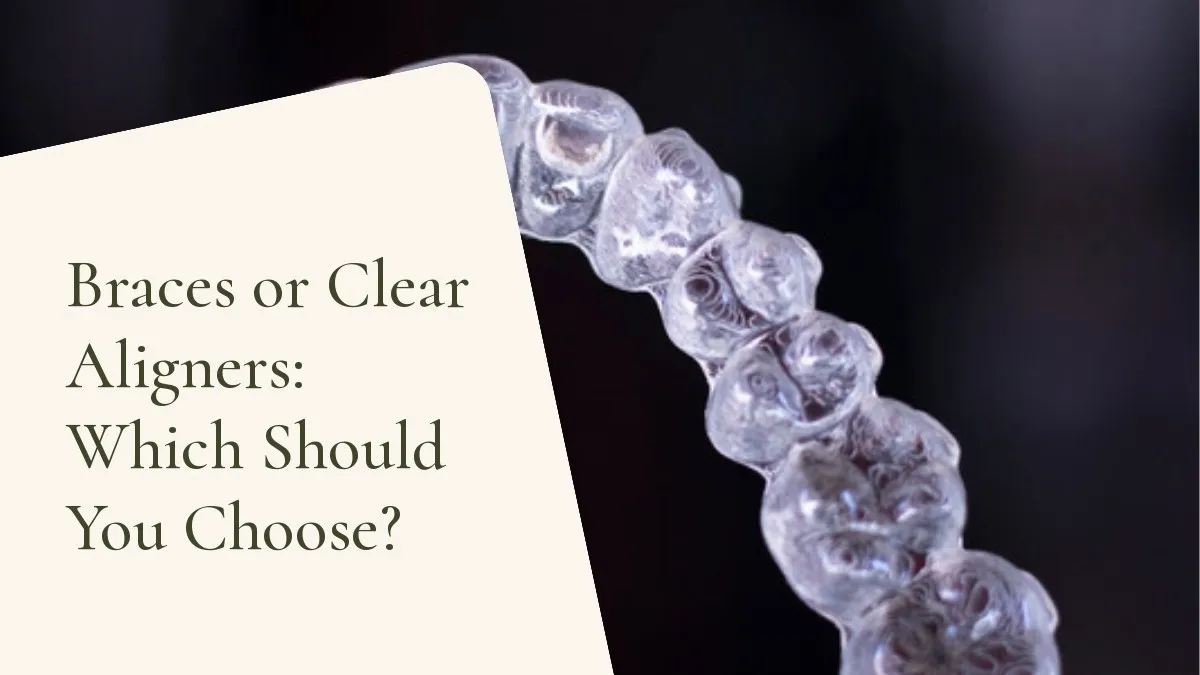
Invisible braces is the popular name for clear aligners: a series of thin, custom-made trays that fit over the teeth and move them gradually to the planned position. They have no brackets or wires, are removable and, being transparent, are very discreet. Invisalign is the best-known brand, but other aligner systems exist.
Many adults look for clear aligners to correct crooked teeth, gaps or crowding without the look of fixed braces, including people whose teeth moved back after braces as teenagers, or who want to align before veneers or whitening.
In this article, Dr. Cléo Salustiano (CRO-SP 170844), who offers braces and Invisalign in Mooca, São Paulo, explains how clear aligners work, which cases they usually suit, their limits and what changes in your routine.
This article comes from Dr. Cléo Salustiano's dental office in Mooca, São Paulo (care in English, Portuguese and Spanish). See the braces and invisalign page to learn how the treatment is done here and book your assessment.
How do clear aligners work?
Clear aligners work in stages: each tray is slightly different from the previous one and applies a light, controlled force that moves the teeth a fraction of a millimeter. Changing trays as scheduled moves the teeth one step further, until they reach the position planned at the start.
It starts with an assessment of teeth, gums and bite, X-rays when needed and a digital scan of the mouth. From the scan, a virtual plan shows the expected movement of each tooth and how many aligners are needed. The trays are only produced after the plan is approved.
Small tooth-colored resin bumps, called attachments, are often bonded to some teeth to help the aligner grip and guide movement. Minimal polishing between some teeth may also be planned to create space.
Aligners need to be worn 20 to 22 hours a day, removed only to eat, drink anything other than water and brush. At the end, a retainer is needed to keep the teeth in place, which is true for both aligners and fixed braces.
Who are clear aligners for, and how do you care for them?
Clear aligners suit many cases of crooked teeth, mild to moderate crowding, gaps, relapse after previous braces and some bite problems. In some situations, fixed braces remain the more predictable option; this is decided at the assessment.
Because aligners are removable, results depend on daily wear. If you tend to forget the trays or find it hard to keep the routine, fixed braces may be a safer choice.
Take the aligners out to eat and to drink anything other than water, brush before putting them back, clean them with a soft brush and cold water and always keep them in their case. Coffee, soda or wine with the trays in can stain them and favor cavities.
In Mooca, Dr. Cléo Salustiano sees patients every day from 8 a.m. to 10 p.m., in English, Portuguese or Spanish, and handles the assessment and digital planning at the office.
Are invisible braces and Invisalign the same thing?
+
Invisalign is a brand of invisible braces, the best known. Clear aligner is the generic name, and there are different systems and brands. All work with trays changed in stages, but they differ in planning software, material and follow-up. The system is discussed at the assessment.
Can people see clear aligners?
+
They are very discreet because they are transparent and follow the shape of the teeth. Up close, you may notice a slight shine and, when there are attachments, small tooth-colored bumps. In everyday conversation most people do not notice. Keeping the trays clean helps them stay discreet.
How many hours a day do I need to wear them?
+
Usually 20 to 22 hours a day. Aligners come out only to eat, drink anything other than water and brush. Wearing them less means the teeth do not keep up with the trays, which delays treatment and may require extra aligners.
Do clear aligners hurt?
+
They usually do not hurt, but it is common to feel pressure for the first days of each new tray. This shows the teeth are moving and tends to ease within a few days. If the edge of a tray irritates the gum, the dentist can adjust it.
How long does treatment take?
+
It depends on the case. Simple adjustments can take a few months; broader corrections can take a year or more. The expected time appears in the digital plan but may change depending on how the teeth respond and on daily wear. A retainer phase follows at the end.
Do clear aligners work for every case?
+
They work for many cases, but not all. Very rotated teeth, some complex bites and large movements may be more predictable with fixed braces or a combination of approaches. The assessment, with an exam and a scan, shows whether aligners are the best option for you.
Do I need a retainer afterwards?
+
Yes. Once aligned, teeth tend to move partly back, so a retainer is used to keep the result. It can be a removable tray worn at night, a wire bonded behind the teeth, or both. The type and how long to wear it are defined at the end of treatment.
Where can I get an assessment for clear aligners in Mooca?
+
Dr. Cléo Salustiano (CRO-SP 170844) assesses clear aligners and Invisalign at Rua Hipódromo, 1141, Mooca, about 400 meters from Bresser-Mooca station, every day from 8 a.m. to 10 p.m., in English, Portuguese or Spanish. Book by WhatsApp at +55 11 97409-7834.